
A 4-Week Boxing Workout Plan for Beginners
This plan teaches boxing at home in 4 weeks, with no bag and no gear. Week 1 is the jab and cross, week 2 adds the hooks, week 3 the uppercuts, and week 4 puts all six punches together. Each workout is 6 to 12 minutes of rounds, plus a warm-up, 2 to 5 days a week.
- Week 1: Jab and cross 3 rounds of 1:30, about 6 min
- Week 2: Add the hooks 3 rounds of 2:00, about 8 min
- Week 3: Add the uppercuts 4 rounds of 2:00, about 10 min
- Week 4: Put it together 4 rounds of 2:30, about 12 min
45 seconds of rest between rounds. 2 to 5 workouts a week.
Download the free PDFOne page, with every combo and a box to tick after each workout.
Key points
- Each week adds one family of punches and a little more time.
- Rounds grow from 1:30 to 2:30, always with 45 seconds of rest.
- Move up a week only when the combos feel easy and both hands come back to your chin.
- The free one-page PDF has every combo and a box to tick after each workout.
The plan at a glance
The plan is the first four weeks of Guardia's program, the Rookie rank. It follows the order boxing coaches teach: straight punches first, then hooks and uppercuts. Guardia adds the hooks a week before the uppercuts, then puts everything together. Each week adds one new thing and a little more time.
| Week | Focus | Rounds | Rest | Boxing time |
|---|---|---|---|---|
| 1 | Jab and cross | 3 of 1:30 | 0:45 | About 6 min |
| 2 | Add the hooks | 3 of 2:00 | 0:45 | About 8 min |
| 3 | Add the uppercuts | 4 of 2:00 | 0:45 | About 10 min |
| 4 | Put it together | 4 of 2:30 | 0:45 | About 12 min |
Train 2 to 5 days a week. The times above are rounds and rests only. Add a warm-up of 5 to 10 minutes before each workout. The round and rest times are a coaching choice, kept shorter than a pro's 3 minutes, not the result of a study.
Download the plan as a one-page PDF. Print it, tape it near your training spot, and tick a box after each workout.
Before your first workout
You need three things, and none of them costs money:
- Space: 2 to 3 meters of clear floor in front of you and an arm's length on each side. The home setup guide covers floors, noise, and where to put your phone.
- Your stance and guard: feet a shoulder-width apart, lead foot forward, both fists at your chin, elbows in. Right-handers usually lead with the left foot. The guard guide shows both stances.
- The numbers: 1 jab, 2 cross, 3 lead hook, 4 rear hook, 5 lead uppercut, 6 rear uppercut. Odd numbers are your lead hand, even numbers your rear hand. The boxing numbers chart has all six, with audio.
How each workout runs
- Warm up for 5 to 10 minutes. March or skip in place, roll your shoulders and wrists, and throw slow, loose punches. Warming up helps performance and may lower the risk of injury.
- Build up the first combo, one punch at a time, and throw each step twice. For 1-2-1-2: 1, then 1-2, then 1-2-1, then the whole combo.
- Drill each combo of the week 3 times in a row. Throw, come back to your guard, throw again.
- Mix the combos in the last third of the round, one of each, in any order.
- Finish with 10 seconds of fast punches. Keep them clean, and bring each hand back to your chin.
- Rest 45 seconds. Keep moving lightly and let your arms hang loose. Then start the next round.
- Cool down for a few minutes after the last round: walk, then stretch your shoulders and chest.
Set the round timer to the week's rounds. The links in each week below open it with the right times.
Week 1: jab and cross
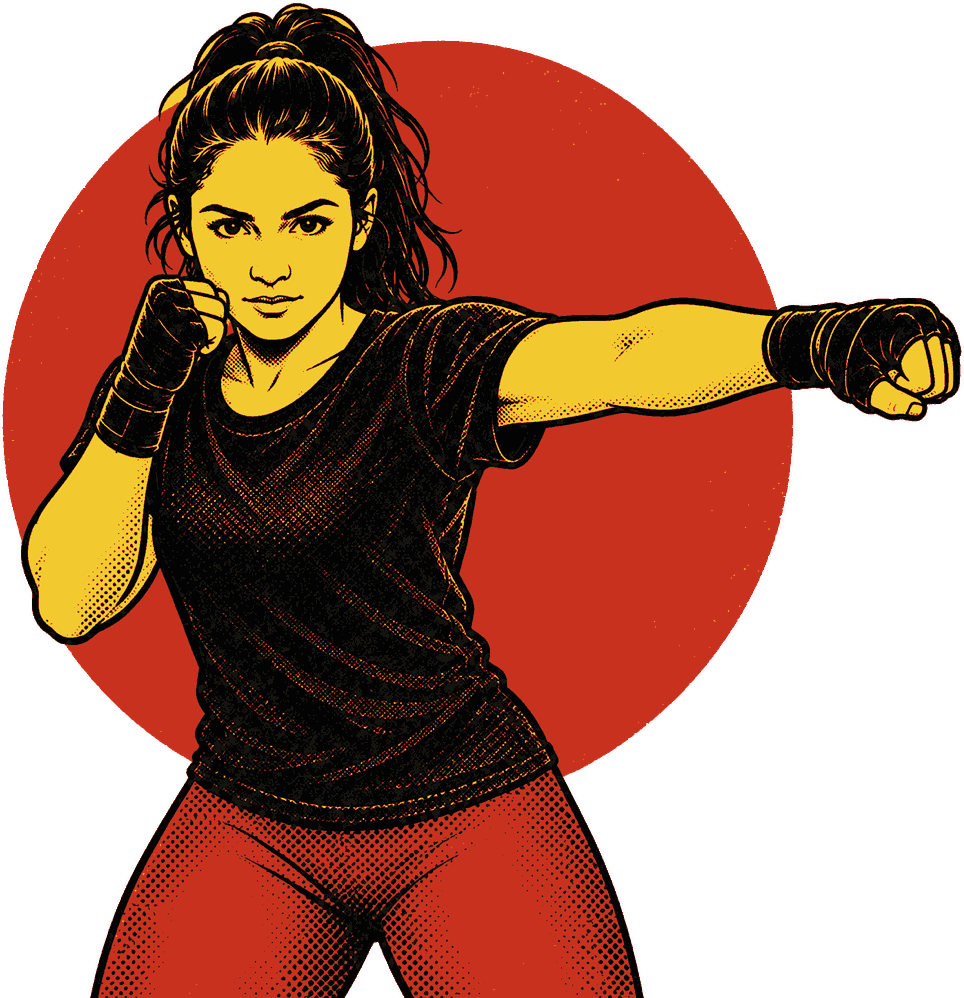
3 rounds of 1:30, about 6 minutes. Open the timer for week 1.
The jab and cross are the base of every combo you will learn. This week, care about one thing: each fist goes out straight and comes straight back to your chin. Speed comes later.
| Call | Punches |
|---|---|
| 1 | Jab |
| 2 | Cross |
| 1-2 | Jab, cross |
| 1-1-2 | Jab, jab, cross |
| 1-2-1 | Jab, cross, jab |
| 1-2-1-2 | Jab, cross, jab, cross |
Hear how the first calls of a week-1 round sound. The coach builds 1-2-1-2 up one punch at a time, calls each step twice, and leaves you time to throw each call:
Transcript: Bell. Jab. Jab. Jab, cross. Jab, cross. Jab, cross, jab. Jab, cross, jab. Jab, cross, jab, cross. Jab, cross, jab, cross.
The jab guide and the cross guide break each punch into steps.
Week 2: add the hooks
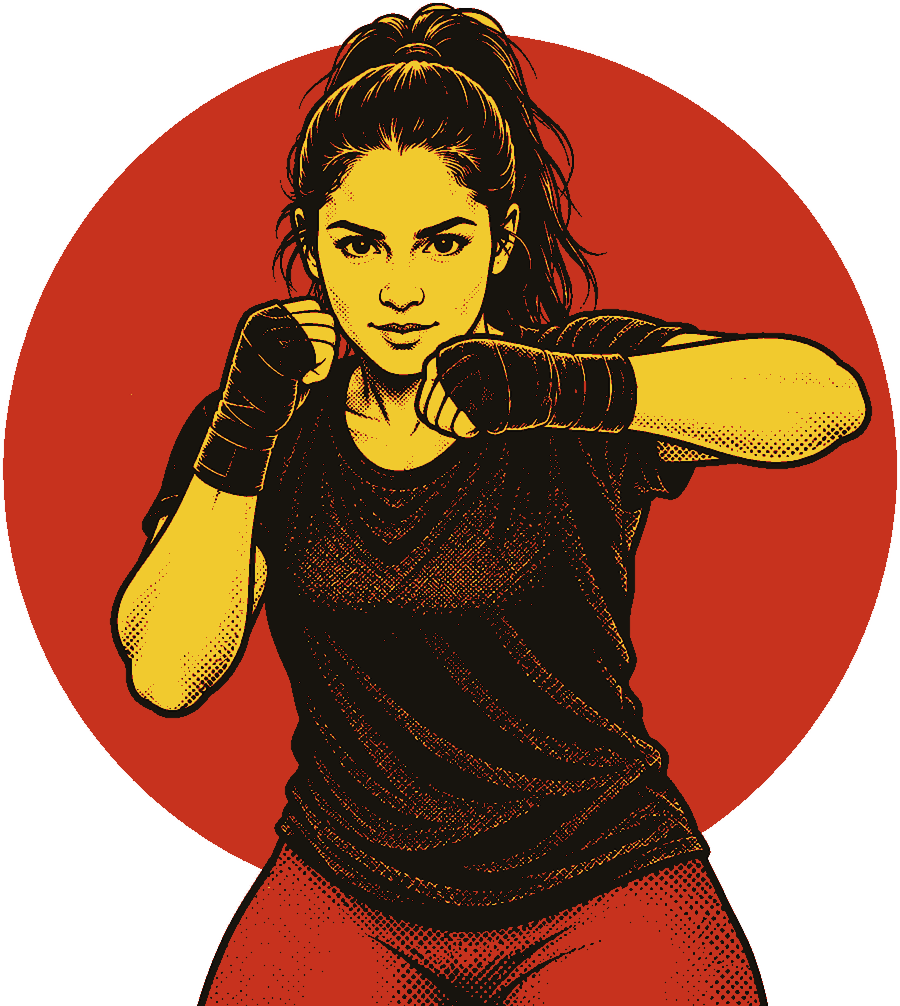
3 rounds of 2:00, about 8 minutes. Open the timer for week 2.
Hooks are short and curved. Keep your elbow up at the height of your fist, and turn your hip and foot on the punching side. A wide, swinging arm is a common mistake: keep the arc short.
| Call | Punches |
|---|---|
| 1-2 | Jab, cross |
| 2-3 | Cross, lead hook |
| 3-2 | Lead hook, cross |
| 1-2-3 | Jab, cross, lead hook |
| 1-4 | Jab, rear hook |
| 2-3-2 | Cross, lead hook, cross |
| 1-2-3-2 | Jab, cross, lead hook, cross |
The hook guide covers the lead and the rear hook.
Week 3: add the uppercuts
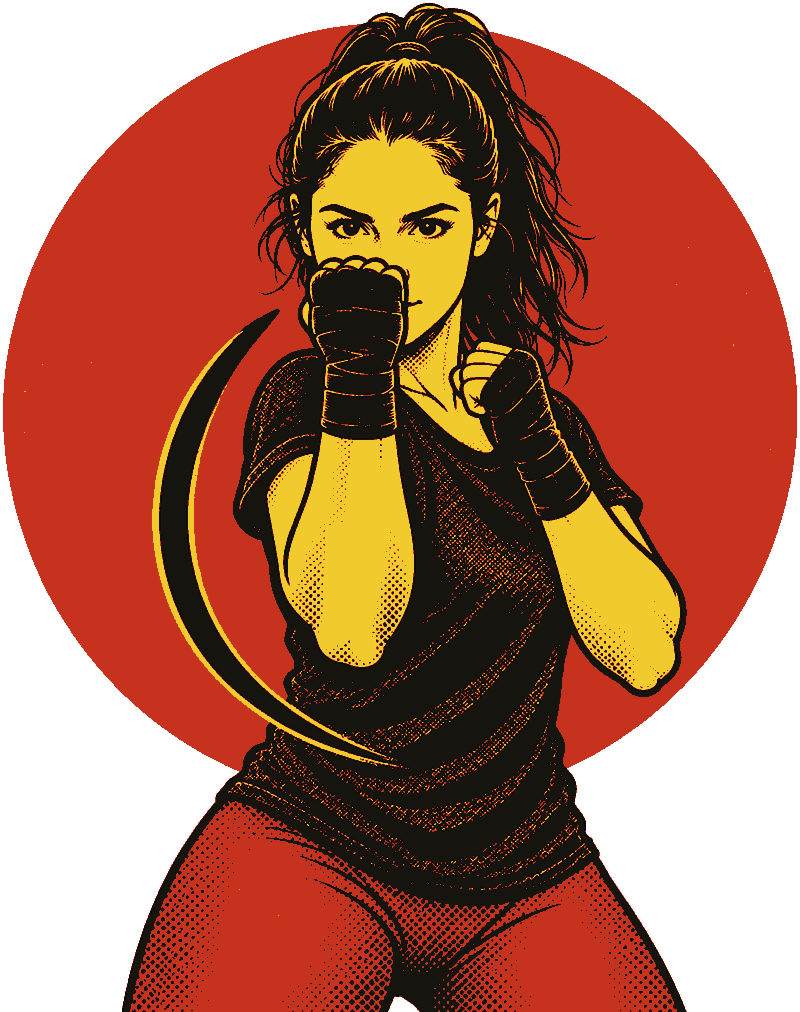
4 rounds of 2:00, about 10 minutes. Open the timer for week 3.
This week adds a round. Uppercuts rise from below with your arm bent and your palm toward you. Bend your knees a little and drive up with your legs. Do not drop your hand to wind up first.
| Call | Punches |
|---|---|
| 1-2 | Jab, cross |
| 5-2 | Lead uppercut, cross |
| 1-6 | Jab, rear uppercut |
| 6-3 | Rear uppercut, lead hook |
| 5-2-3 | Lead uppercut, cross, lead hook |
| 1-2-5-2 | Jab, cross, lead uppercut, cross |
| 1-6-3-2 | Jab, rear uppercut, lead hook, cross |
The uppercut guide covers both hands.
Week 4: put it together
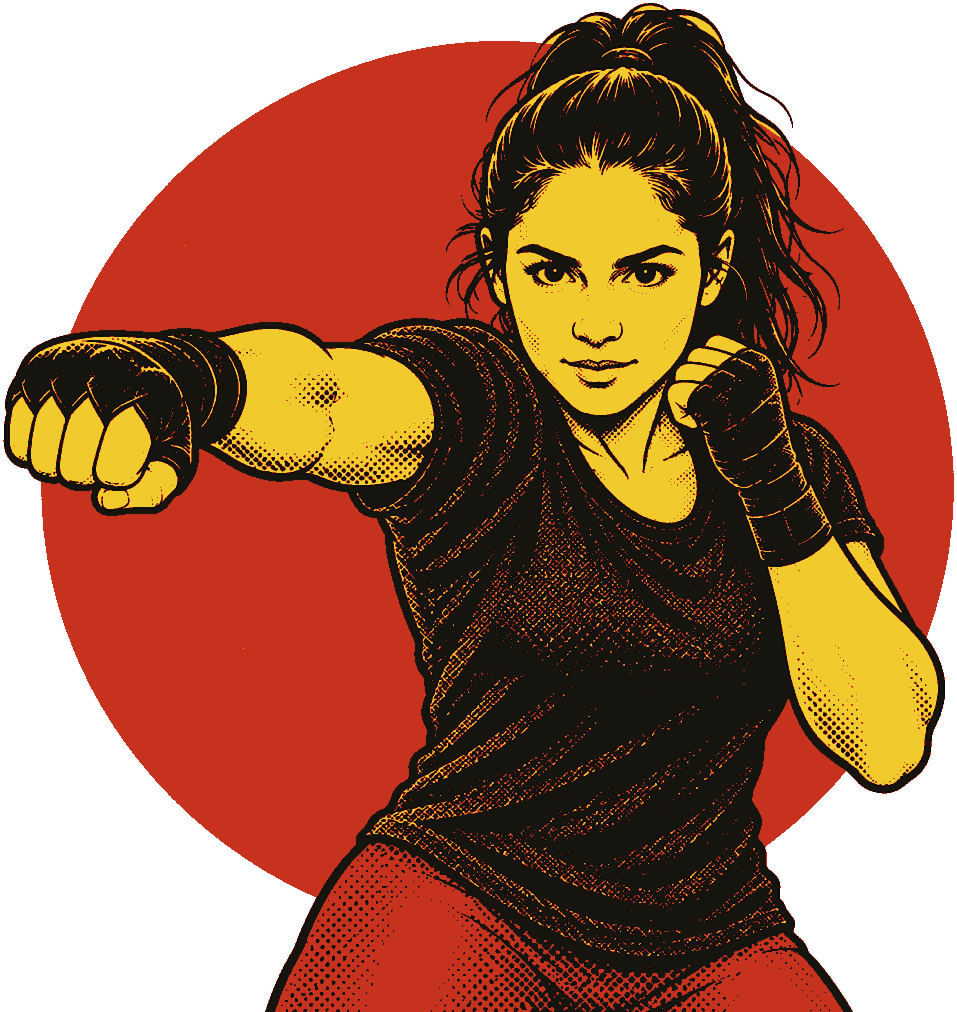
4 rounds of 2:30, about 12 minutes. Open the timer for week 4.
Week 4 mixes the main combos of weeks 1 to 3 with two new things: punches to the body and moves of the head. A b after a number means to the body, so 2b is a cross to the body. Bend your knees to drop your level. Do not punch down.
The combos to the head this week: 1-2, 1-1-2, 1-2-3, 3-2, 2-3-2, 1-2-3-2, 3-4-2, 1-6, 5-2, 6-3, 1-2-5-2, 1-6-3-2.
| Call | Punches |
|---|---|
| 1-2b | Jab, body cross |
| 1b-2 | Body jab, cross |
| 1-2b-3 | Jab, body cross, lead hook |
| 1-1-2b-3 | Jab, jab, body cross, lead hook |
| 1-2-3-2b | Jab, cross, lead hook, body cross |
| 1-2-3b | Jab, cross, lead body hook |
| 3b-3 | Lead body hook, lead hook |
| 2-3b-2 | Cross, lead body hook, cross |
| 3-4b-3 | Lead hook, rear body hook, lead hook |
A slip moves your head to the side, off the line of a straight punch. A roll bends your knees and dips your head under a hook. Both end with your hands still at your chin.
| Call | Moves |
|---|---|
| 1-2-slip | Jab, cross, slip |
| slip-2 | Slip, cross |
| slip-2-3 | Slip, cross, lead hook |
| roll-3-2 | Roll, lead hook, cross |
| 2-3-roll-3-2 | Cross, lead hook, roll, lead hook, cross |
How many days a week to train
Pick a number of days you can keep for 4 weeks, from 2 to 5. Fewer days you keep beat more days you skip. A week of the plan ends when you have done that many workouts, so a busy week only slows the plan down.
| Days a week | Example | Good for |
|---|---|---|
| 2 | Monday, Thursday | Busy weeks, or if you do another sport |
| 3 | Monday, Wednesday, Friday | Most beginners |
| 4 | Monday, Tuesday, Thursday, Friday | Once 3 days feel easy |
| 5 | Monday to Friday | If you recover well and keep the weekend free |
Rest days count. Sore shoulders or wrists, or a guard that drops early in round 1, mean you need another day off. The US physical activity guidelines say that spreading activity across at least 3 days a week may help reduce the risk of injury.
This plan teaches boxing. It is not all the exercise you need: the WHO guidelines advise adults to get at least 150 minutes of moderate activity a week. Walking, cycling, or another sport on your rest days fills the gap.
When to move up a week
Move to the next week when all three are true:
- You can throw every combo of the week without stopping to think about the numbers.
- Both hands come back to your chin after every punch, in the last round too.
- You can catch your breath in the 45 seconds of rest.
If not, repeat the week.
After the 4 weeks
Keep week 4 as your base workout, and change one thing at a time. Make the rounds longer, up to the 3 minutes of an elite or professional round. Or add longer combos, like 1-2-3-2-1. The guide to how long a boxing round is lists the round lengths of each level.
If you want to hit something, now is a good time to try a bag, with hand wraps and gloves. The hand wrap guide has a picture of each stage.
Run the plan with Guardia
The plan works with the PDF and the free timer. You call the combos yourself. The hard part is seeing your own mistakes, because nobody is there to tell you that a hand dropped.
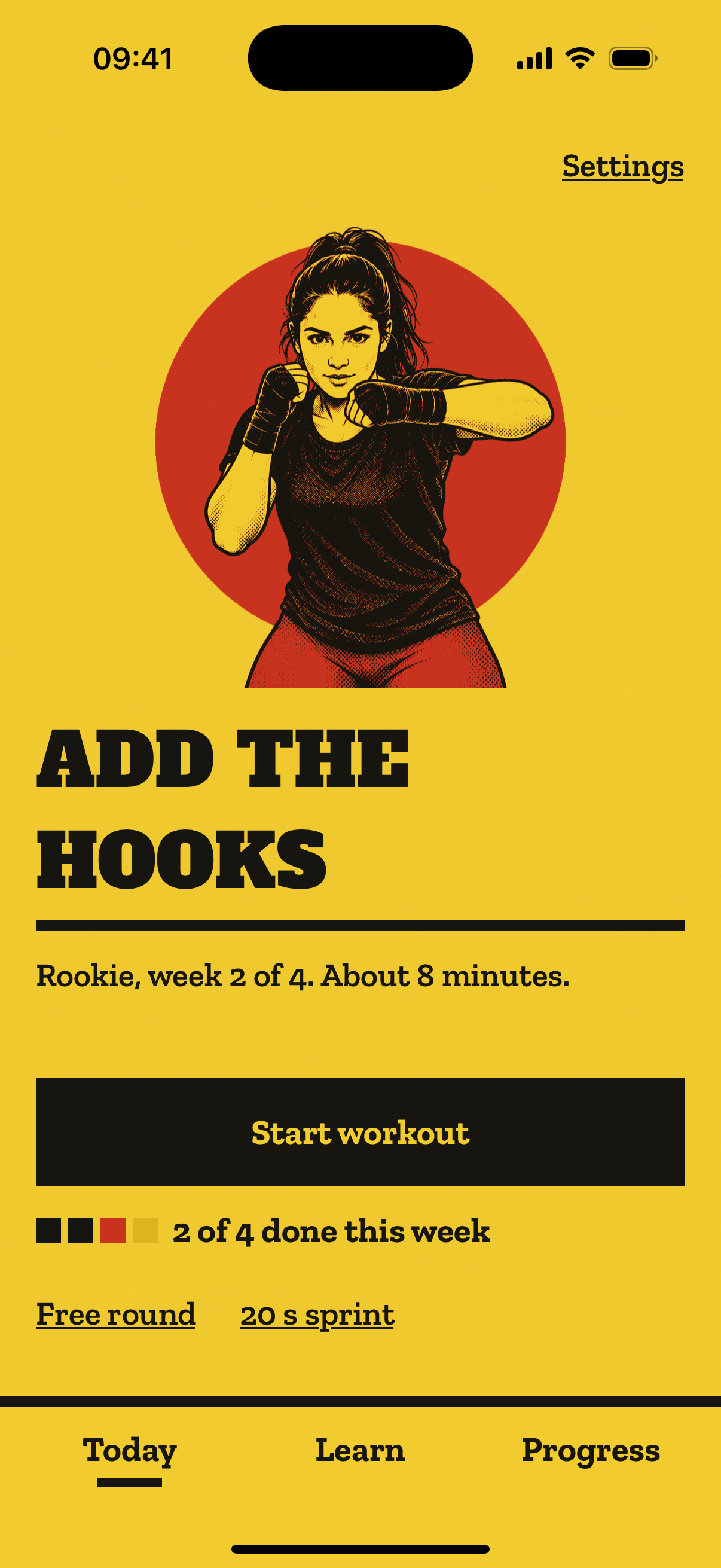
In Guardia, the coach calls every combo of the week out loud, by name or by number, in English or Spanish. Prop your iPhone up 2 to 3 meters away and face it: the camera counts and names each punch, and the guard check tells you which hand dropped. After a workout with more than 9 in 10 combos clean, the next one calls a step quicker. Under 7 in 10, it calls a step slower. The phone does the counting, and video never leaves your phone.
Safety before you start
- New to exercise, or have a heart, joint, or other health condition? Check with a doctor first. The free PAR-Q+ questionnaire tells you whether you should.
- Warm up for 5 to 10 minutes: easy steps, arm circles, slow shadow boxing. A warm-up helps you move better and may lower injury risk.
- Clear 2 to 3 meters of floor in front of you. That is also the space the app's camera needs.
- Wrap your hands and wear gloves on a bag. In Great Britain's elite team, the hand was injured more than any other part of the body. Shadow boxing needs no gloves.
- Stop if you feel chest pain, dizziness, unusual shortness of breath, joint pain that does not settle, or numbness or swelling in a hand.
Questions about the plan
How long should a beginner boxing workout be?
Short. This plan starts with 3 rounds of 1:30, about 6 minutes of boxing, and ends week 4 at 4 rounds of 2:30, about 12 minutes. Add 5 to 10 minutes of warm-up. Stop early on any day your form breaks down.
How many days a week should a beginner box?
Two or three days is a good start, with a day off between workouts. Go up to 4 or 5 days once the workouts feel easy. If you do other sports, count them too.
How long should you rest between rounds?
In this plan, 45 seconds. Competition rules give 1 minute of rest at every level, after rounds of up to 3 minutes. The plan’s rounds are shorter, so it uses a shorter rest.
Can I do this plan every day?
The workouts are short, but your shoulders, wrists, and legs still need time to recover. Keep at least 2 days a week free of boxing, the way the plan does.
Do I need a punching bag or gloves?
No. The plan is shadow boxing: you throw real punches at the air. If you use a bag, wrap your hands and wear boxing gloves every time.
I am left-handed. Does the plan change?
Only your hands. Southpaws stand with the right foot forward, so 1, 3, and 5 come from the right hand and 2, 4, and 6 from the left. The numbers and the combos stay the same.
What do I do after week 4?
Repeat week 4 until it feels easy, then make one change at a time: longer rounds, up to 3 minutes, or longer combos. In Guardia, a short skill test opens the next rank, which adds body work, longer combos, and 3-minute rounds.
Sources
- World Health Organization, 2020. WHO guidelines on physical activity and sedentary behaviour. World Health Organization.
- US Department of Health and Human Services, 2018. Physical Activity Guidelines for Americans, 2nd edition. health.gov.
- Garber and others, 2011. Quantity and quality of exercise for developing and maintaining cardiorespiratory, musculoskeletal, and neuromotor fitness in apparently healthy adults. Medicine and Science in Sports and Exercise.
- Fradkin, Zazryn, and Smoliga, 2010. Effects of warming-up on physical performance: a systematic review with meta-analysis. Journal of Strength and Conditioning Research.
- Fradkin, Gabbe, and Cameron, 2006. Does warming up prevent injury in sport? The evidence from randomised controlled trials?. Journal of Science and Medicine in Sport.
- PAR-Q+ Collaboration. The Physical Activity Readiness Questionnaire for Everyone (PAR-Q+). eparmedx.com.
Guardia calls every combo in this plan, counts your punches, and tells you when your guard drops.

Guardia
Shadow training and home workouts
For iPhone. Coaching in English or Spanish.