
How to Wrap Your Hands for Boxing
Put your thumb through the loop, take the wrap across the back of your hand, and wrap your wrist 3 times and your knuckles 3 times. Then cross the back of your hand, weave between your fingers, loop your thumb, and finish at the wrist. You need wraps to hit a bag or pads, not to shadow box.
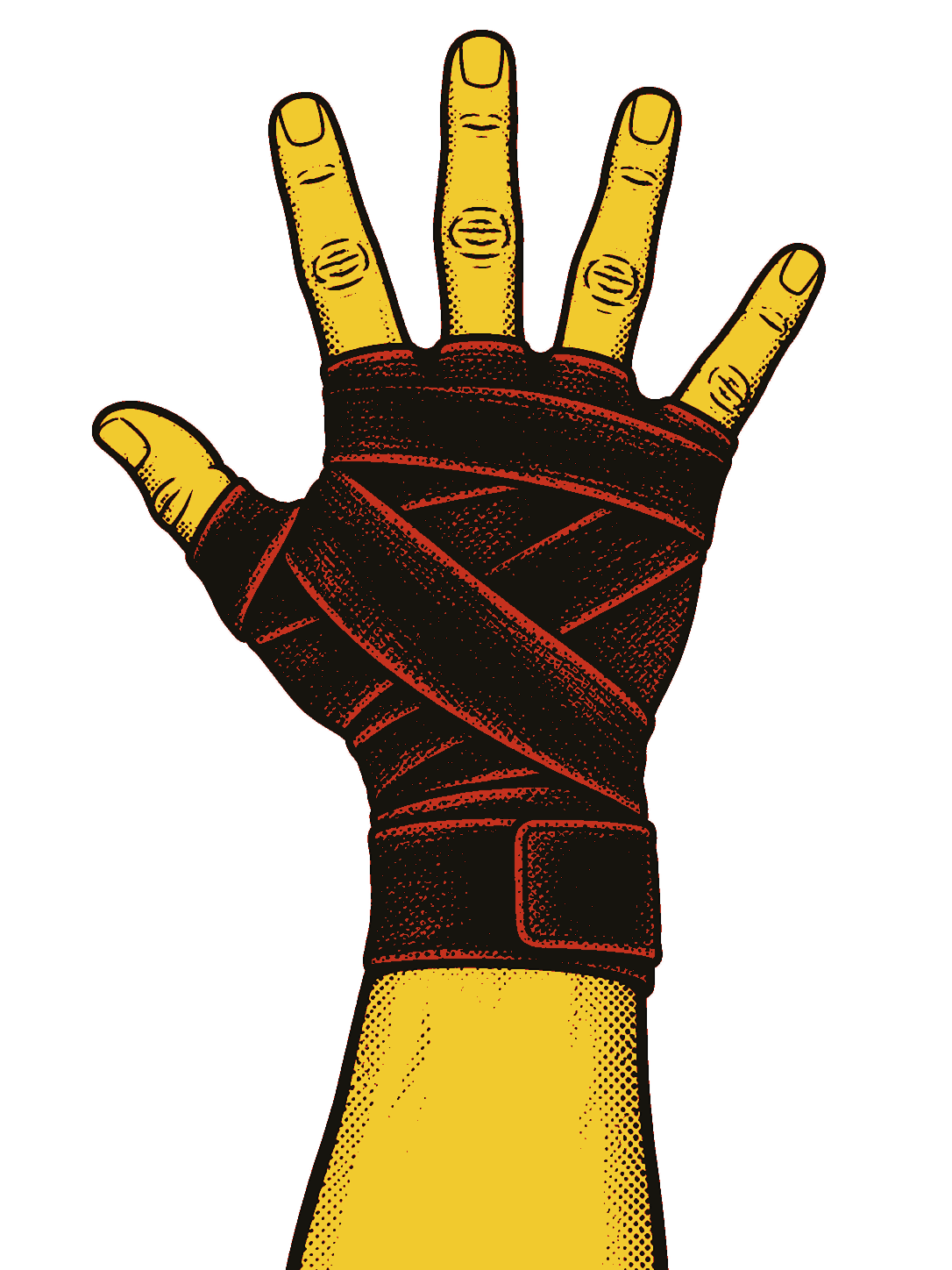
Key points
- Wraps are for hitting things: a bag, pads, sparring. Shadow boxing needs no wraps and no gloves.
- Most adults use 180-inch (4.5 m) wraps. 120-inch (3 m) wraps suit smaller hands.
- Snug, not tight: pale, tingling, or numb fingers mean you should wrap again, looser.
- Wraps never replace gloves. On a bag, wear both.
Do you need hand wraps?
Only when you hit something. Wraps are meant to hold the small bones of your hand and your wrist together under impact. In shadow boxing you punch the air, so there is no impact to protect against.
| Training | Wraps | Gloves |
|---|---|---|
| Shadow boxing | No | No |
| Punching bag | Yes | Yes |
| Pads with a partner | Yes | Yes |
| Sparring | Yes | Yes, plus the club's own rules |
The hand is where boxers get hurt most. In Great Britain's elite squad, the hand had more injuries than any other part of the body. In US emergency rooms from 1990 to 2008, the hand was 33% of boxing injuries, and 37% of all boxing injuries came from punching bags.
Which hand wraps to buy
| Length | In meters | Who it suits |
|---|---|---|
| 120 inches | About 3 m | Smaller hands and lighter workouts |
| 180 inches | About 4.5 m | Most adults, and anyone who hits a bag hard |
Fairtex calls 180 inches the standard for adult training, and Title suggests it for most boxers over 125 lb (57 kg). If you are not sure, buy 180. Extra length only means one more turn around the wrist.
- Mexican-style wraps stretch a little, so they mold to your hand. That also makes them easy to pull too tight.
- Gel or slip-on wraps are quick to put on, but they support your wrist less. Keep them for light work, not for a heavy bag.
How to wrap your hands, step by step
These steps are for a 180-inch wrap on your own hand. Wrap with your fingers spread and your wrist straight, and keep every pass flat. Do the second hand the same way.
-
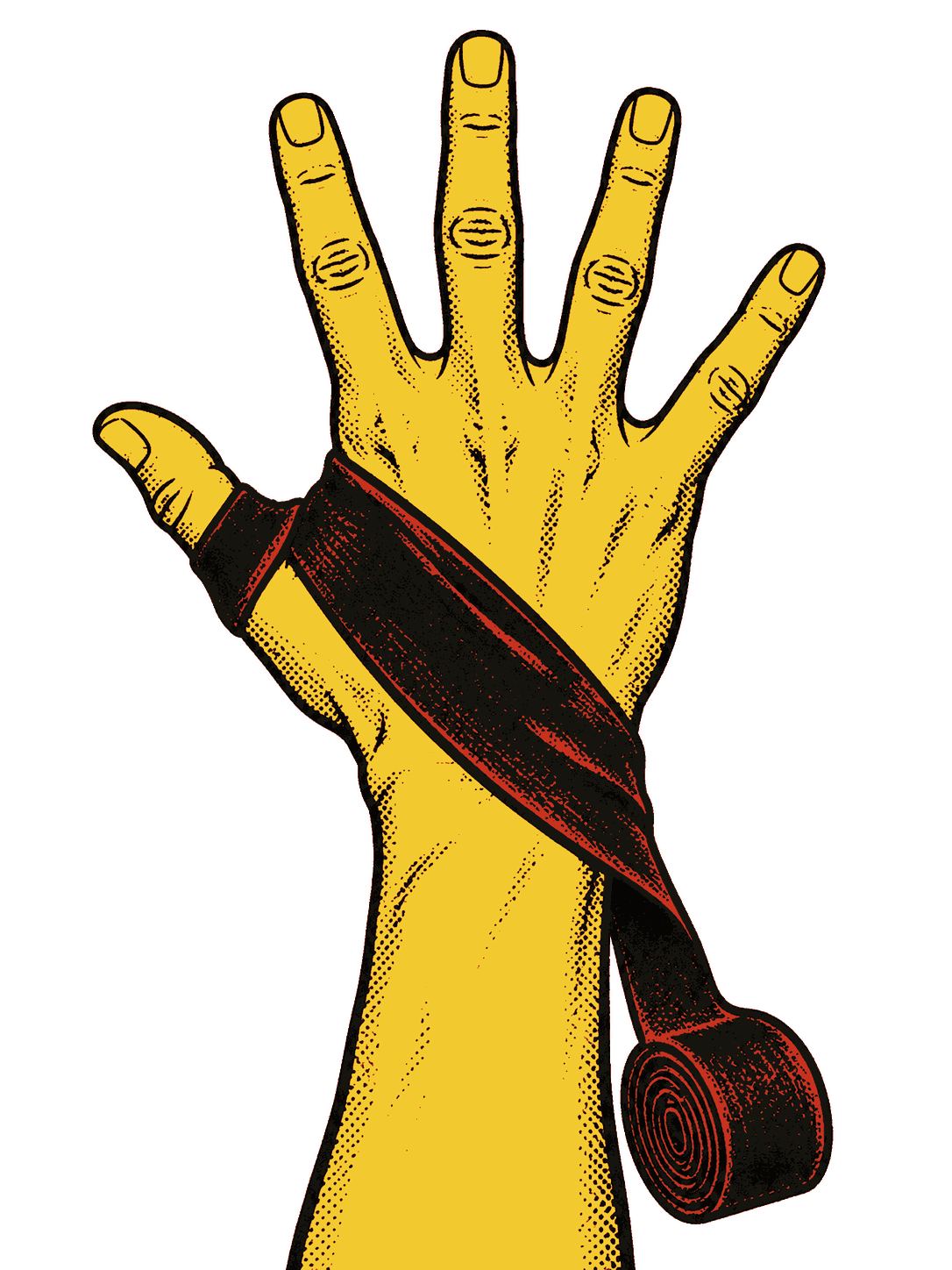
Spread your fingers wide and put your thumb through the loop at the start of the wrap.
-
Take the wrap across the back of your hand, not your palm, down toward your wrist. Then it tightens when you make a fist.
-
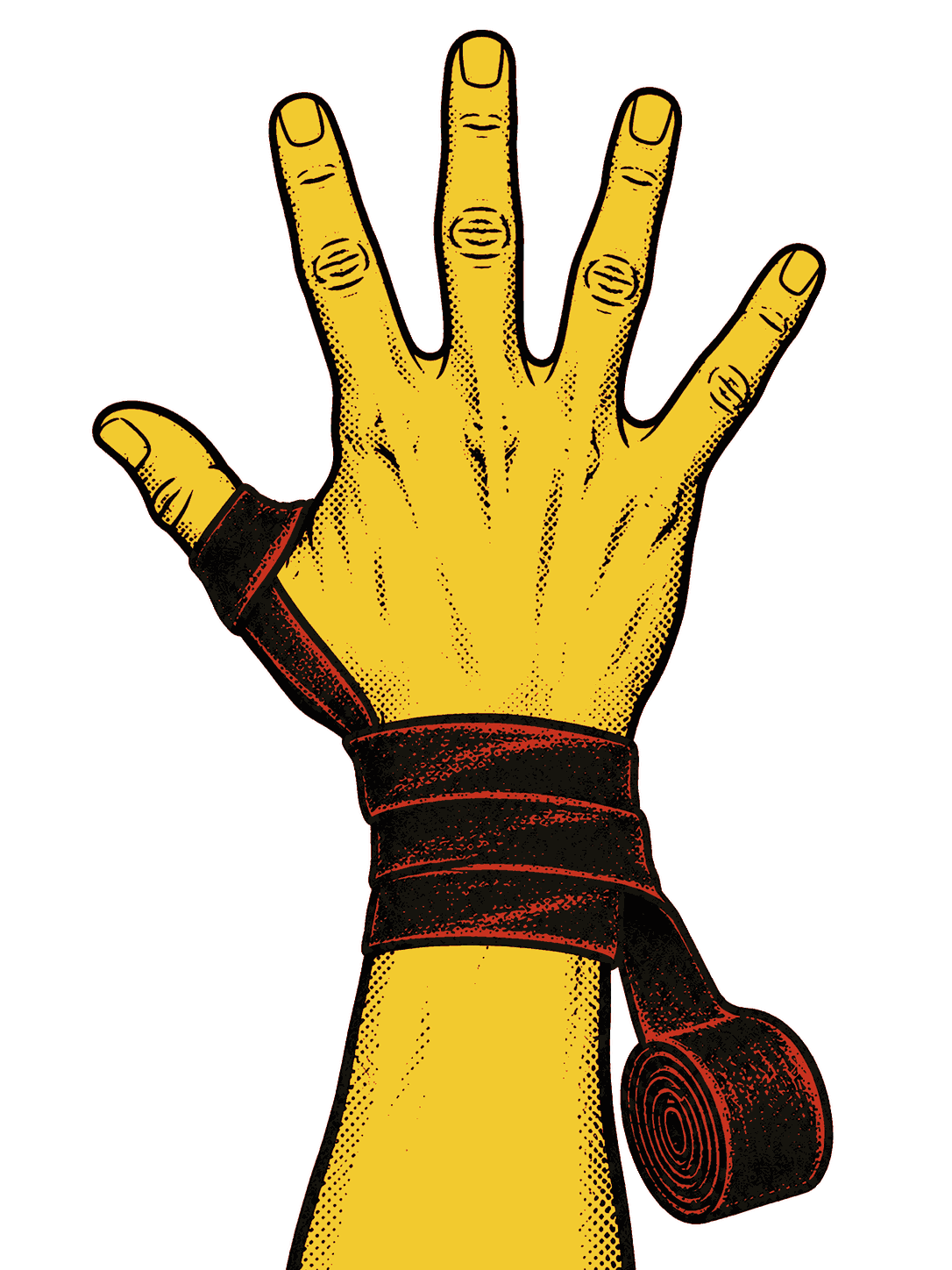
Wrap your wrist 3 times, flat, with your wrist straight.
-
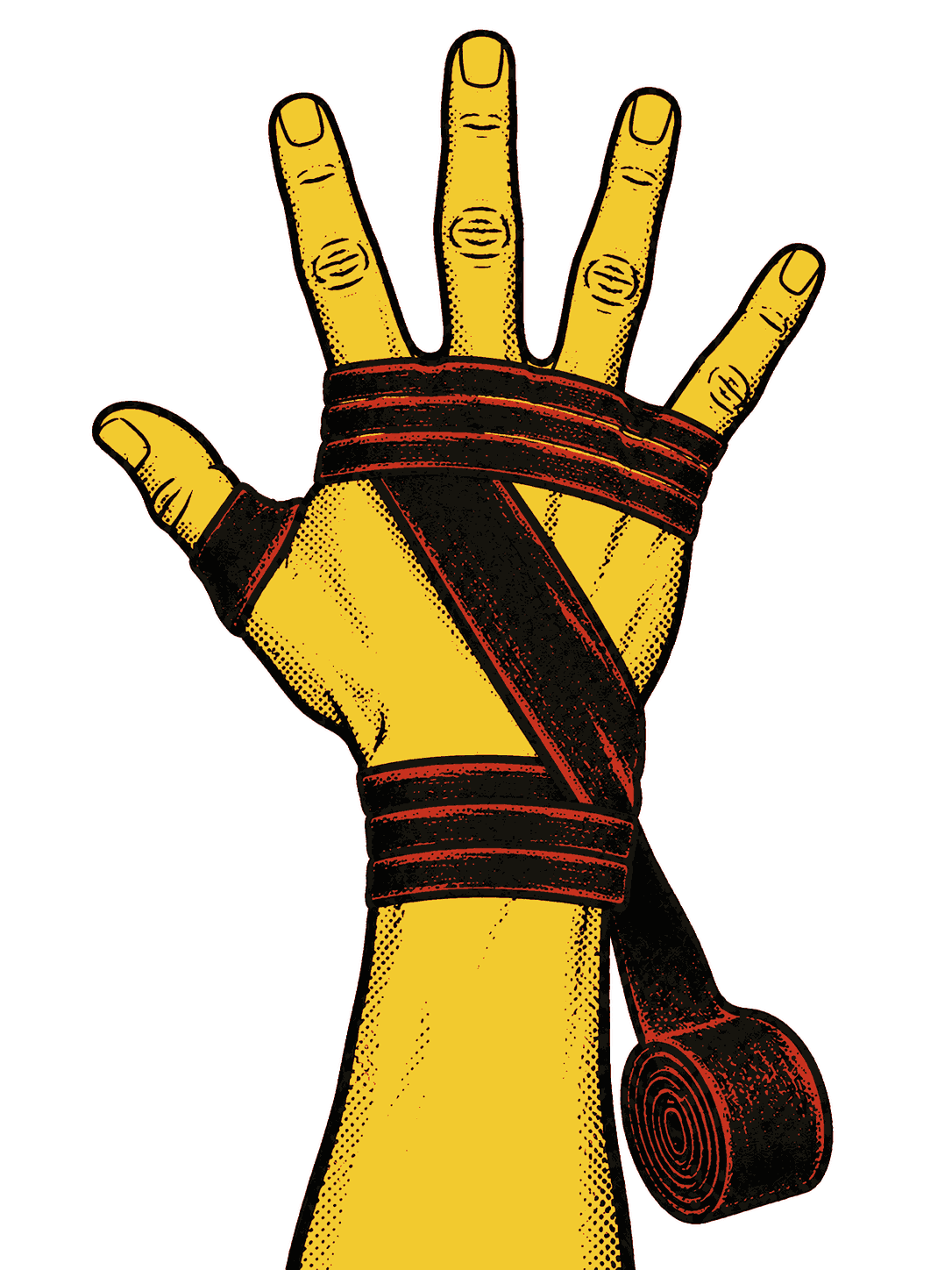
Cross the back of your hand and wrap your knuckles 3 times, flat and smooth.
-
Go back down to your wrist once.
-
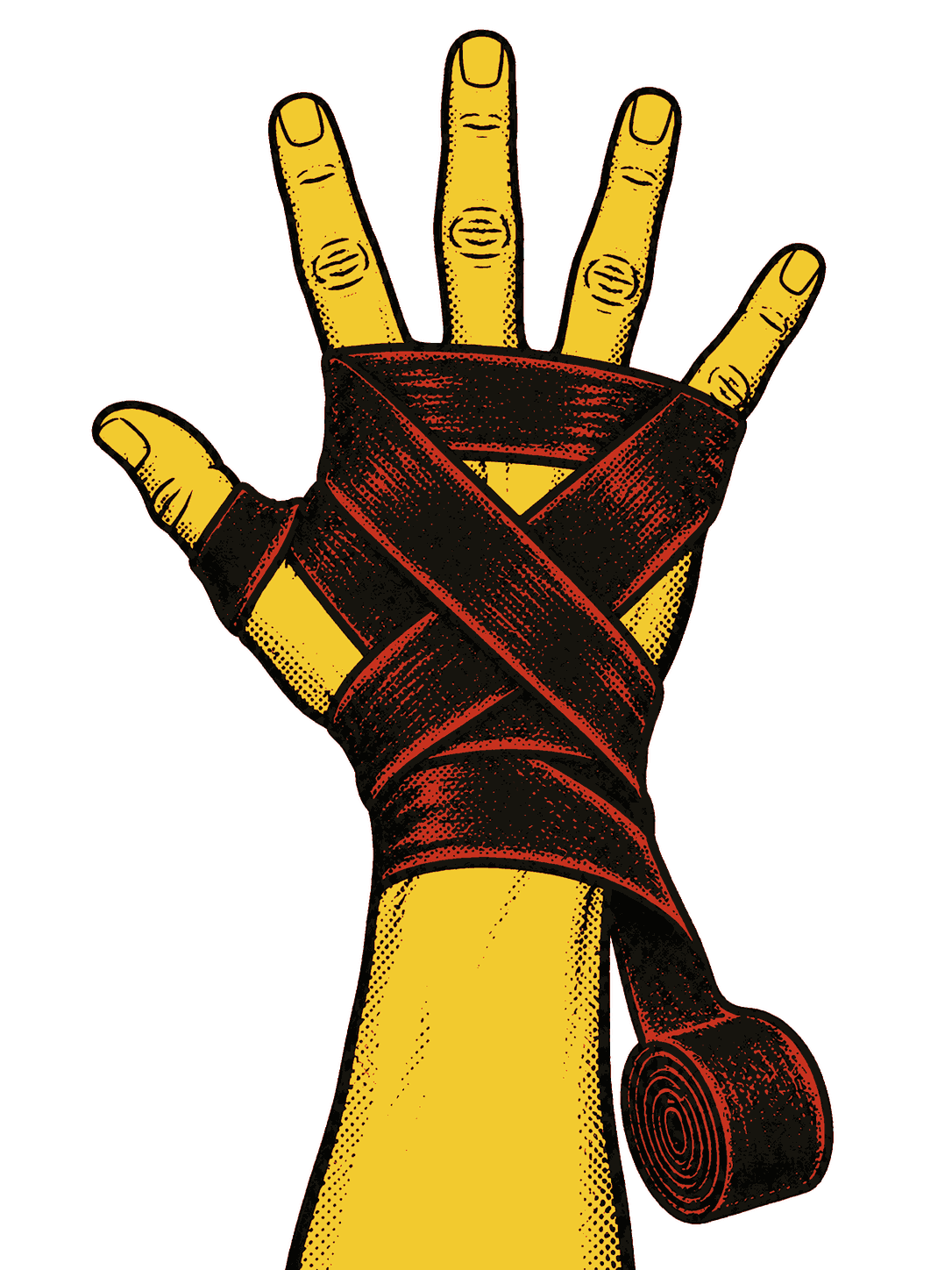
Cross the back of your hand from the wrist to the knuckles and back again, so the wrap makes an X.
-
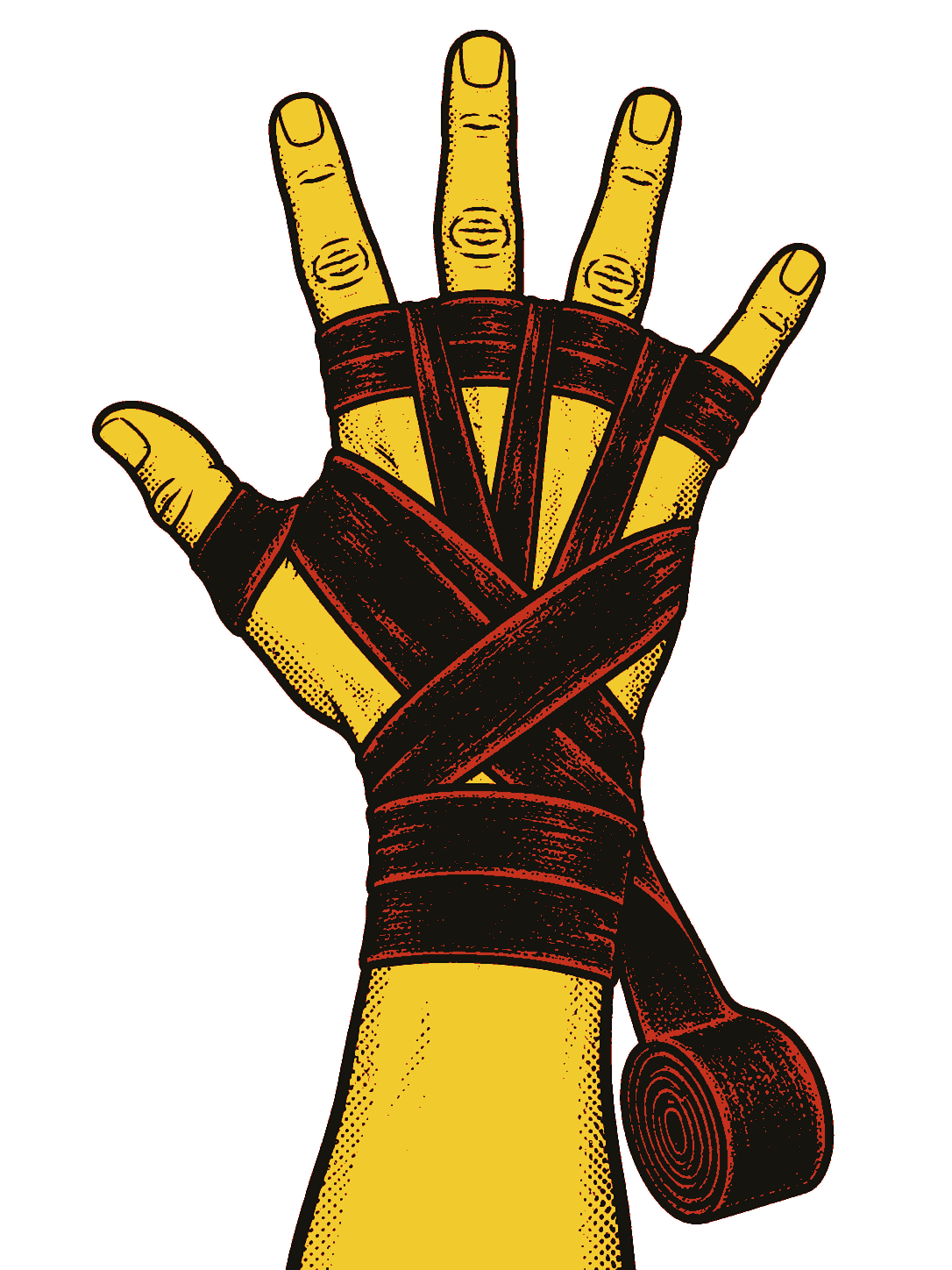
Weave lightly between your fingers: little and ring finger, ring and middle, middle and index. Go back to the wrist after each one.
-
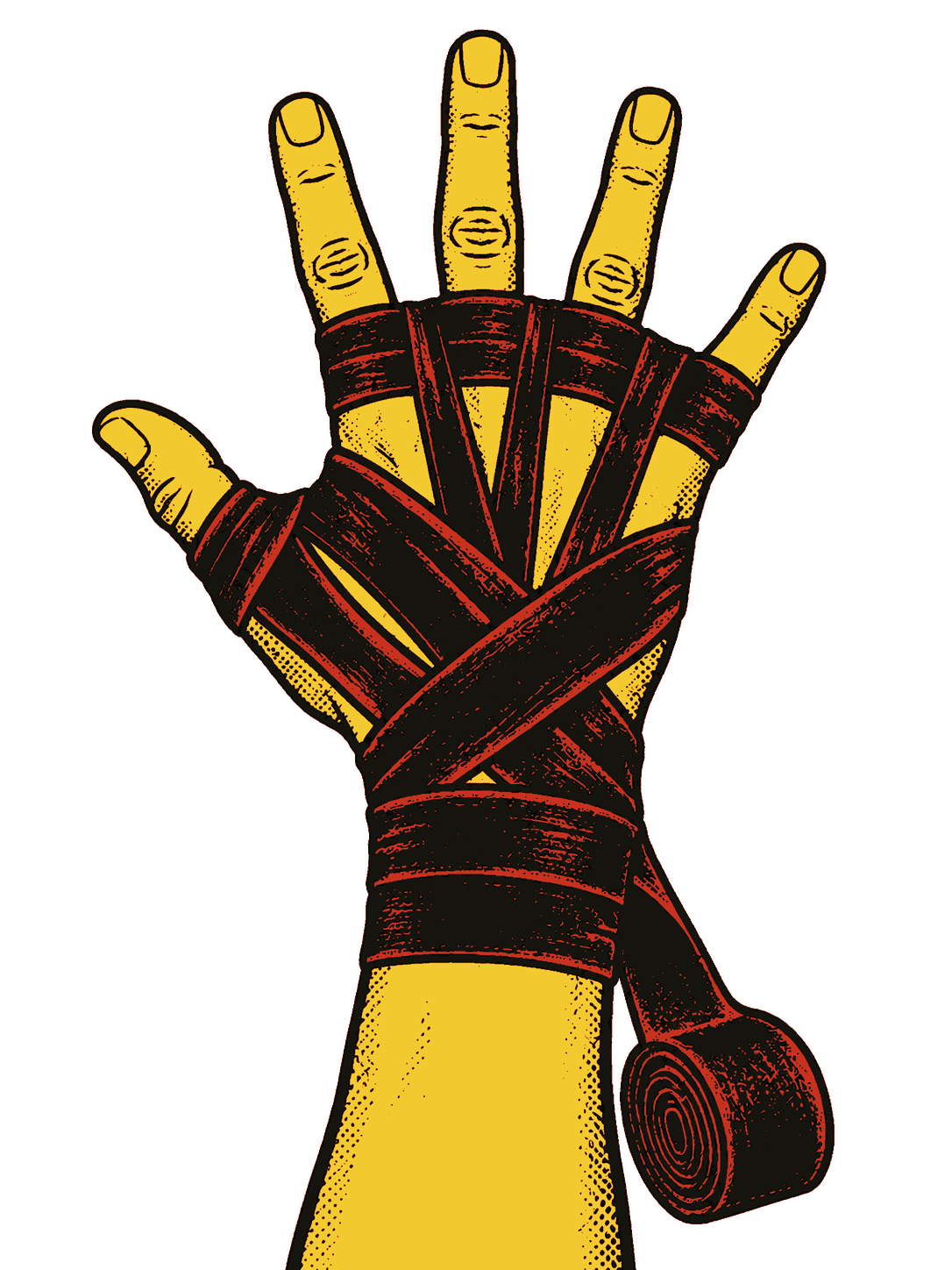
Loop the wrap once around your thumb, then back to your wrist.
-
Wrap what is left around your wrist and close the hook-and-loop strap there.
-
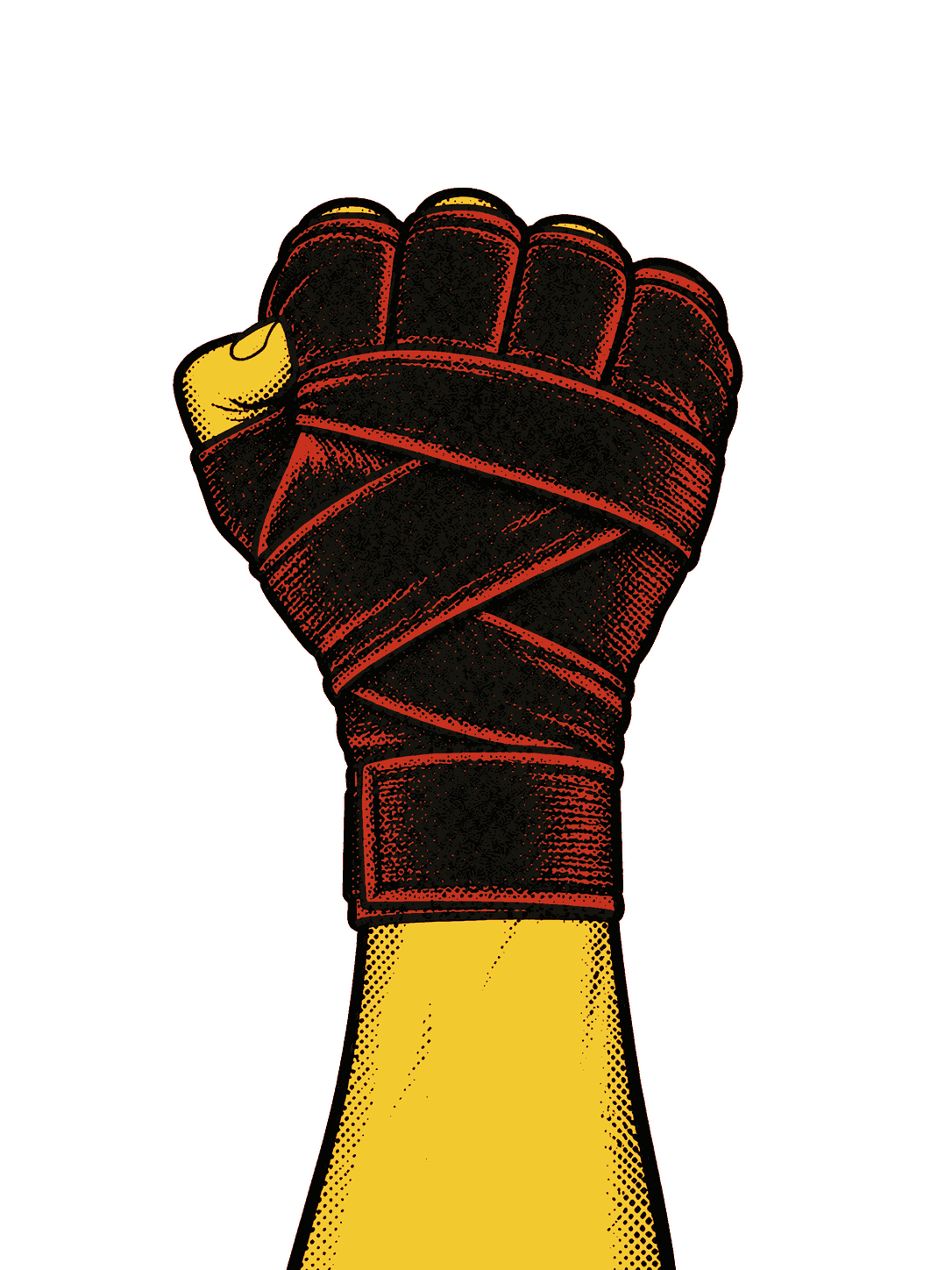
Make a fist. It should feel snug and firm, with no pain. If your fingers turn pale or tingle, unwrap and do it again with less pull.
How tight should hand wraps be?
Snug enough that your hand feels like one solid block when you make a fist, and loose enough that nothing hurts. Check it two ways:
- Right away: make a fist and open it. Your fingers should keep their color and feel normal. If they turn pale or tingle, unwrap and wrap again with less pull.
- After half an hour: if your hand aches or your fingers turn white, the wrap is probably too tight.
The passes between your fingers are the first place to go numb if you pull too hard. Keep them light.
Common hand wrapping mistakes
| Mistake | What it looks like | Fix |
|---|---|---|
| Too tight | Pale, tingling, or numb fingers | Wrap again with less pull, most of all between the fingers |
| Wrinkles | Folds that press into your skin | Pull each pass flat before the next one |
| Loose wrist | Only one turn at the wrist, or none | Start with 3 flat turns, wrist straight |
| Bare knuckles | One thin layer over the knuckles | Wrap the knuckles 3 times, flat |
| Closed hand | Fingers squeezed together while you wrap | Spread your fingers until the last step |
| Wraps only | Hitting a bag with no gloves | Wraps and gloves, every time |
Where the guides disagree
We compared the wrapping guides of Everlast, Title, Fairtex, Expert Boxing, and Boxing Science, written by a physiotherapist for Great Britain's boxing team. They agree on the thumb loop, the wrist, the knuckles, and finishing at the wrist. They differ on the details:
- Turns: 2 or 3 at the wrist, and 2 or 3 at the knuckles. Some other guides go up to 5 or 6.
- Between the fingers: most include it. Fairtex makes it optional, because it is the first place to go numb.
- The thumb: one loop, two loops, or a lock behind the thumb.
- The order: most start at the wrist. Title starts at the knuckles.
None of these is wrong. Pick one method, use it every time, and change one thing only if your hand hurts or feels loose.
What the rule books say
Boxing competitions set limits for the soft wraps boxers wear under their gloves. They show what a standard wrap looks like:
| Rule book | Length | Width | Rule |
|---|---|---|---|
| World Boxing | 3.5 to 4.5 m | 5.7 cm | 13.2.5 |
| IBA | 2.5 to 4.5 m | 5.7 cm | 47.1.4 |
| USA Boxing | 8 to 15 feet | No wider than 2¼ inches | 38.3 |
| England Boxing | 2.5 to 4.5 m | 5.7 cm | 8.6.1 |
All four ask for soft, stretchy cotton with a hook-and-loop strap. Gauze and tape, the hard wraps of professional and elite fights, have rules of their own. For training at home, you need none of this: a pair of 180-inch wraps is enough.
How to wash and dry hand wraps
- Close the strap and roll each wrap into a loose coil, so it does not tangle.
- Put both in a mesh laundry bag, or a pillowcase tied shut.
- Wash on a gentle cycle, cold or warm, with a mild detergent and no fabric softener.
- Let them air dry. Roll them up again once they are dry.
Fairtex suggests washing them after every session if you train hard. Wet wraps stay damp in a gym bag and start to smell.
What the science says about wraps
The research on wraps is thin. A study of elite boxers found that adding tape over a bandage cut wrist movement by a further 25 to 30%, but that is competition taping, not the wraps you buy. We found no study that tests whether hand wraps prevent injuries in people who train at home or at a gym. Wraps are standard because coaches and the rule books treat them as standard, and because the hand is the part of a boxer that gets hurt most.
Boxing at home without wraps
If you train at home with no bag, you can skip all of this. Shadow boxing teaches the punches, the guard, and the combos with nothing to hit, and Guardia's rounds are shadow boxing too. Buy wraps and gloves on the day you add a bag. The home setup guide lists what else you need, and what you do not.
Safety for your hands
- New to exercise, or have a heart, joint, or other health condition? Check with a doctor first. The free PAR-Q+ questionnaire tells you whether you should.
- Warm up for 5 to 10 minutes: easy steps, arm circles, slow shadow boxing. A warm-up helps you move better and may lower injury risk.
- Clear 2 to 3 meters of floor in front of you. That is also the space the app's camera needs.
- Wrap your hands and wear gloves on a bag. In Great Britain's elite team, the hand was injured more than any other part of the body. Shadow boxing needs no gloves.
- Stop if you feel chest pain, dizziness, unusual shortness of breath, joint pain that does not settle, or numbness or swelling in a hand.
Questions about hand wraps
Do you need hand wraps for shadow boxing?
No. In shadow boxing you hit nothing, so your hands take no impact. Wraps and gloves are for the bag, pads, and sparring.
Can you hit a punching bag with only hand wraps?
No. Wraps hold the bones of your hand and wrist together, but they add almost no padding. Always wear boxing gloves over them on a bag.
Should I buy 120-inch or 180-inch wraps?
For most adults, 180 inches (about 4.5 m). It is long enough for 3 turns at the wrist, 3 at the knuckles, an X, and the fingers. 120-inch wraps (about 3 m) suit smaller hands and lighter work.
How tight should hand wraps be?
Firm enough that your hand feels supported when you make a fist, loose enough that nothing hurts. If your fingers turn pale, tingle, or go numb, or your hand aches after half an hour, the wrap is too tight.
How often should you wash hand wraps?
After every hard session, if you can. Close the strap, roll the wraps loosely, and wash them in a mesh bag on a gentle cycle. Let them air dry.
Do hand wraps make you punch harder?
Do not wrap for power. One small 1984 study found that a bandaged hand hit with more force, but it used gauze and tape, not training wraps. Wraps are meant to protect your hands.
Sources
- Loosemore and others, 2015. Boxing injury epidemiology in the Great Britain team: a 5-year surveillance study of medically diagnosed injury incidence and outcome. British Journal of Sports Medicine.
- Loosemore and others, 2017. Hand and wrist injuries in elite boxing: a longitudinal prospective study (2005-2012) of the Great Britain Olympic Boxing Squad. Hand.
- Potter and others, 2011. Boxing injuries presenting to U.S. emergency departments, 1990-2008. American Journal of Preventive Medicine.
- Gatt and others, 2023. Effects of using rigid tape with bandaging techniques on wrist joint motion during boxing shots in elite male athletes. Physical Therapy in Sport.
- Roy and others, 1984. Influence of bandages on the strength of impact of punches in boxing (in French). Canadian Journal of Applied Sport Sciences.
- World Boxing, 2024. Competition Rules, in force November 2024. World Boxing.
- IBA, 2026. Technical and Competition Rules. International Boxing Association.
- USA Boxing, 2026. National Rule Book. USA Boxing.
- England Boxing, 2026. Technical and Competition Rules. England Boxing.
Guardia's rounds are shadow boxing, so you can train without wraps or gloves. The phone counts every punch.

Guardia
Shadow training and home workouts
For iPhone. Coaching in English or Spanish.