
How to Throw an Uppercut
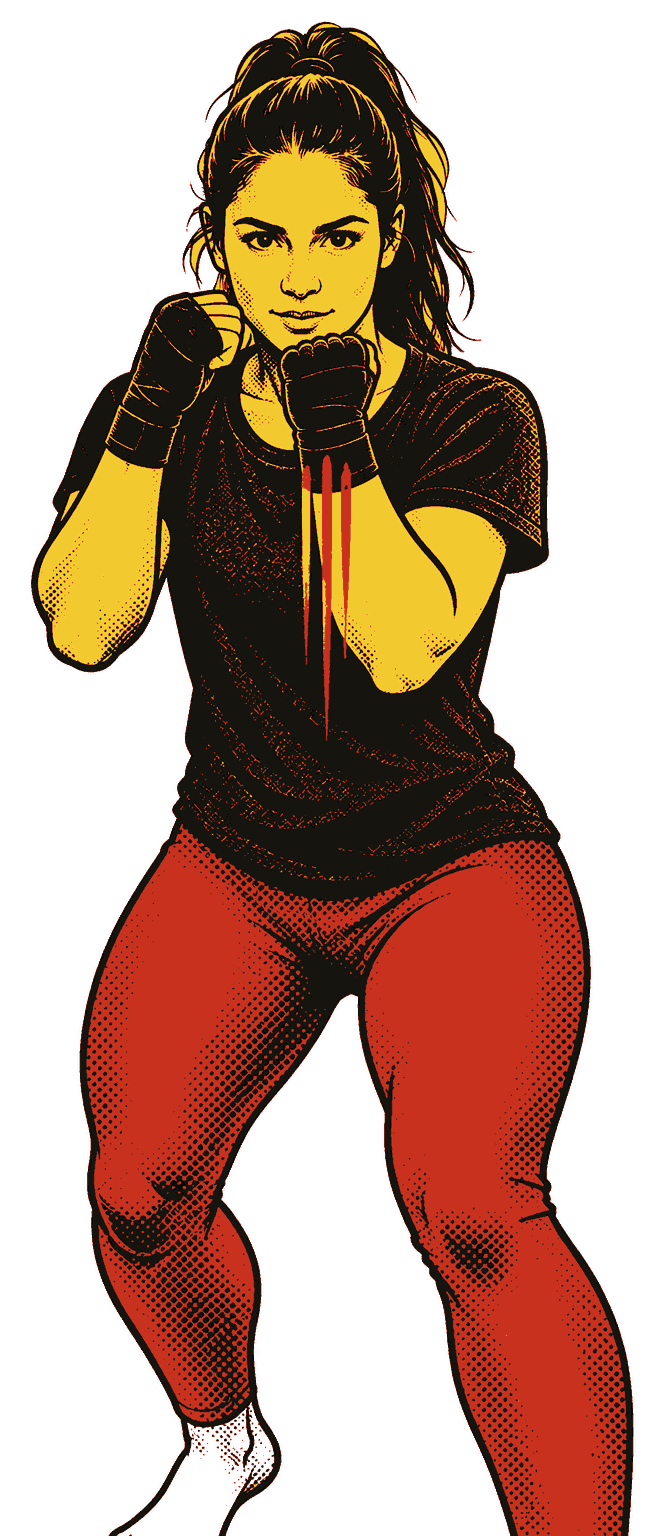
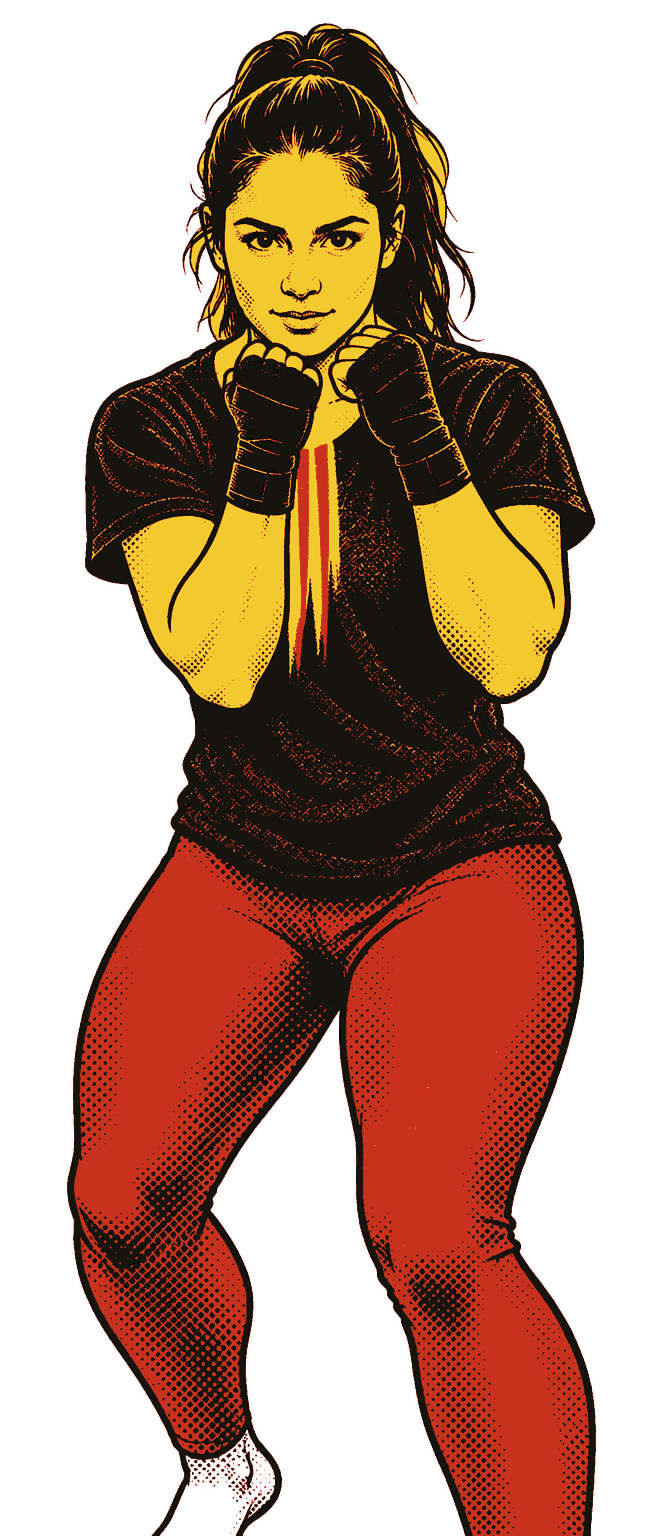
An uppercut is a short punch that rises from below, with your arm bent and your palm facing you. The lead uppercut is punch 5 and the rear uppercut is punch 6. Bend your knees a little, then drive up with your legs and hip, keep the other hand on your chin, and stop the fist at about chin height.
Key points
- There are two uppercuts: the lead uppercut (5) with your lead hand and the rear uppercut (6) with your rear hand.
- The punch starts in your legs: bend your knees, then drive up.
- Keep the elbow bent and the fist close. Do not drop the hand to your waist first.
- Guardia adds the uppercuts in week 3 of its beginner plan: 4 rounds of 2 minutes.
What is an uppercut in boxing?
An uppercut is a punch that rises from below, with the arm bent and the palm facing you. It travels up the middle, under the other person's guard, so boxers throw it at close range. In the boxing numbers the lead uppercut is 5 and the rear uppercut is 6.
Beginners usually learn it last of the six. The lift comes from your knees and your hip, not from the arm.
| Punch | Number | Orthodox | Southpaw |
|---|---|---|---|
| Lead uppercut | 5 | Left hand | Right hand |
| Rear uppercut | 6 | Right hand | Left hand |
How to throw a lead uppercut (5)
- Stand in your guard: lead foot forward, knees soft, both fists on your chin.
- Bend your knees a little and let your weight settle toward your lead side. Your lead fist drops only a few centimeters, no lower than your chest.
- Drive up with your legs and turn your lead hip. The fist rises in front of you, palm facing you, elbow bent at about a right angle.
- Stop the fist at about chin height. Your rear fist stays on your chin.
- Bring the fist back to your chin and settle into your stance.
The coach's cue in Guardia: "Bend your knees, then drive up." The bend comes first, and the punch rides up on it.
How to throw a rear uppercut (6)
- Start in your guard, both fists on your chin.
- Bend your knees a little, with your weight a touch more on your back leg.
- Drive up and turn your back hip forward. Lift your back heel and turn on the ball of the foot, as you do for the cross.
- The rear fist rises up the middle, palm facing you, elbow bent. Stop it at about chin height. Your lead fist stays on your chin.
- Bring the fist back to your chin.
The coach's cue: "Bend your knees, drive up with your hip."
Common uppercut mistakes
| Mistake | What it looks like | Fix |
|---|---|---|
| The hand drops | The fist drops to your waist before it comes up. | Bend your knees instead. The fist drops only a little. |
| A straight arm | The arm opens out and the punch becomes a scoop. | Keep the elbow bent at about a right angle. |
| Bending at the waist | You fold forward instead of bending your knees. | Keep your back straight and dip with your legs. |
| Too big | The fist flies up past your head. | Stop at about chin height and come back. |
| The other hand drops | The hand that is not punching leaves your chin. | Keep it on your chin until the uppercut is back. |
Orthodox and southpaw
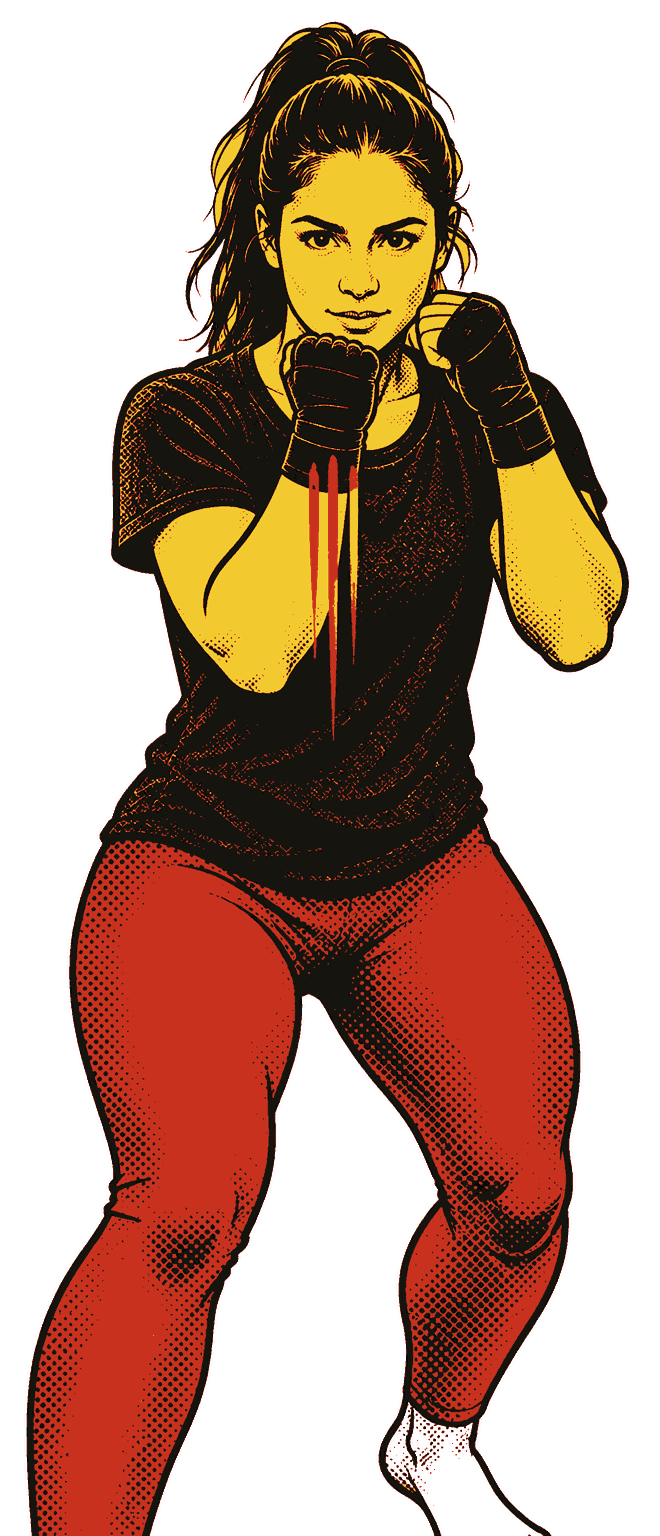
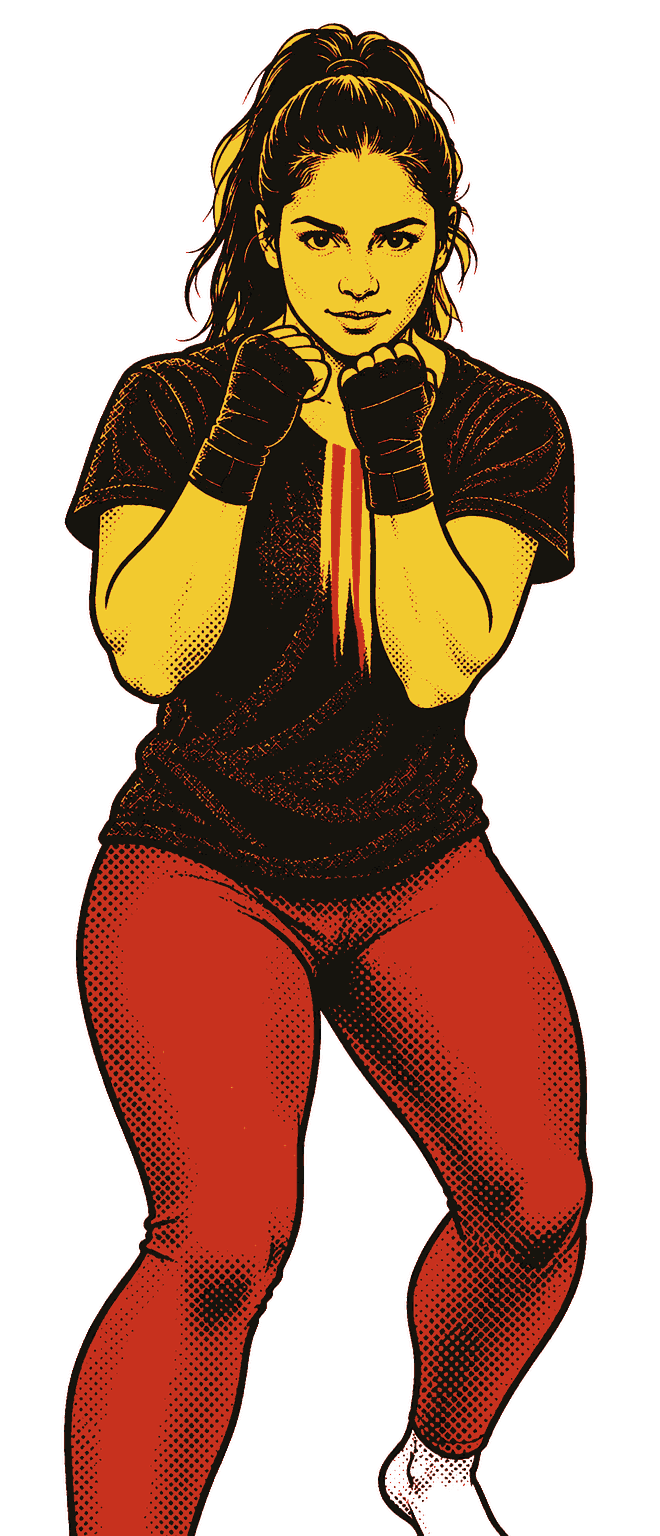
For a southpaw, everything is mirrored: right foot forward, the lead uppercut with the right hand, and the rear uppercut with the left.
Variations
- Uppercut to the body. Bend your knees a little more and drive the fist up at belly height. Keep the other hand on your chin.
- Lead uppercut and cross (5-2). The uppercut turns your lead hip, and the cross turns you back.
- Jab and rear uppercut (1-6). The jab comes back as your knees bend for the uppercut.
- Rear uppercut and lead hook (6-3). Two punches for close range. See how to throw a hook.
A 2-minute uppercut drill at home
Set the boxing round timer to one round of 2:00. Face a mirror or your phone, and change the drill every 30 seconds:
- Lead uppercuts, slow. Knees bend, then drive up.
- Rear uppercuts, slow. The back heel lifts as the hip turns.
- Lead uppercut and cross, 5-2.
- Jab, rear uppercut, lead hook: 1-6-3. Both hands back to your chin after the hook.
Guardia's week 3 is four rounds of 2:00 with 45 seconds of rest, built on these combos.
How Guardia sees your uppercuts
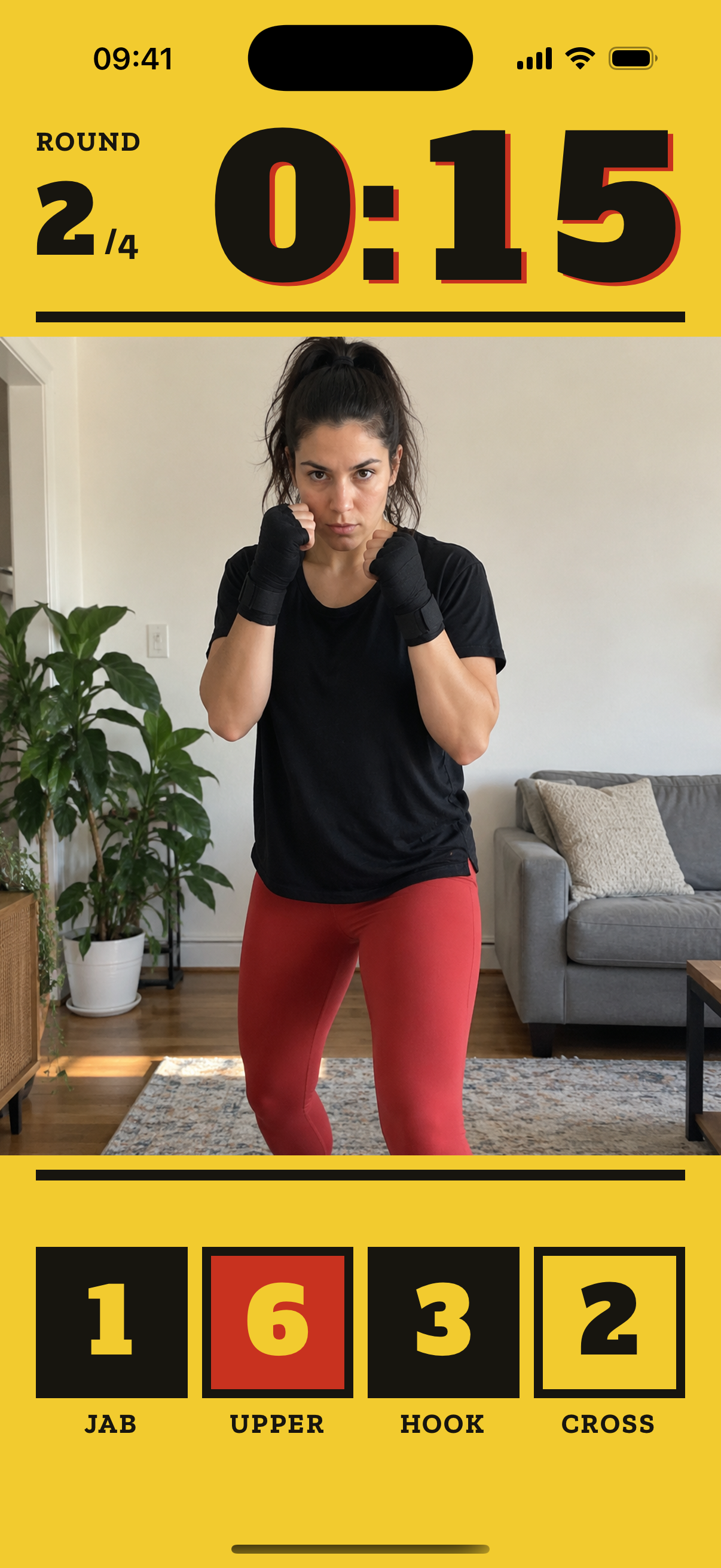
Stand 2 to 3 meters from the phone and face it, so the camera sees your body and both hands. Guardia follows your whole body and names each uppercut live, as you throw it. You pick your stance in the app, so it knows your lead hand and can tell a 5 from a 6.
Safety before you throw an uppercut
- New to exercise, or have a heart, joint, or other health condition? Check with a doctor first. The free PAR-Q+ questionnaire tells you whether you should.
- Warm up for 5 to 10 minutes: easy steps, arm circles, slow shadow boxing. A warm-up helps you move better and may lower injury risk.
- Clear 2 to 3 meters of floor in front of you. That is also the space the app's camera needs.
- Wrap your hands and wear gloves on a bag. In Great Britain's elite team, the hand was injured more than any other part of the body. Shadow boxing needs no gloves.
- Stop if you feel chest pain, dizziness, unusual shortness of breath, joint pain that does not settle, or numbness or swelling in a hand.
Uppercut questions
What is an uppercut in boxing?
A short punch that rises up the middle, with the arm bent and the palm facing you, aimed at the chin or the body. The lead uppercut is 5 and the rear uppercut is 6.
What is the difference between a lead and a rear uppercut?
The hand, and the hip that drives it. The lead uppercut uses your lead hand and lead hip, and it is the shorter of the two. The rear uppercut uses your rear hand and turns your back hip and foot, like a cross.
Is an uppercut thrown with the left or the right hand?
Either. Each hand has its own uppercut. An orthodox boxer throws the lead uppercut with the left hand and the rear uppercut with the right. A southpaw does the opposite.
What number is an uppercut in boxing?
The lead uppercut is 5 and the rear uppercut is 6. Odd numbers are lead-hand punches and even numbers are rear-hand punches.
Sources
- Fradkin, Gabbe, and Cameron, 2006. Does warming up prevent injury in sport? The evidence from randomised controlled trials?. Journal of Science and Medicine in Sport.
- Loosemore and others, 2015. Boxing injury epidemiology in the Great Britain team: a 5-year surveillance study of medically diagnosed injury incidence and outcome. British Journal of Sports Medicine.
- PAR-Q+ Collaboration. The Physical Activity Readiness Questionnaire for Everyone (PAR-Q+). eparmedx.com.
Guardia tells your lead uppercut from your rear uppercut as you throw them.

Guardia
Shadow training and home workouts
For iPhone. Coaching in English or Spanish.