
How to Keep Your Guard Up in Boxing
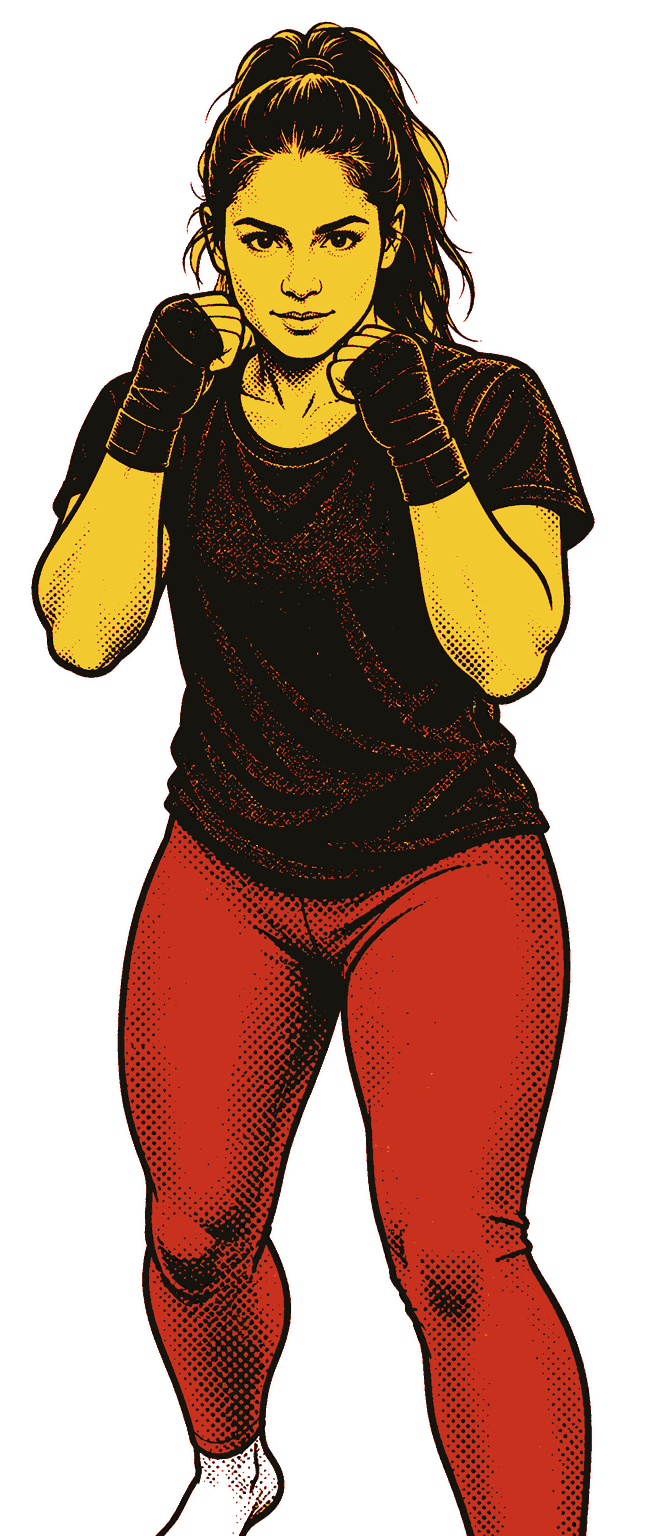
Your guard is where your hands live between punches: both fists at your chin, elbows in, chin down. To keep it up, bring every punch straight back to your chin, keep the hand that is not punching at home, relax your shoulders, and train in short rounds until the habit holds when you are tired.
Key points
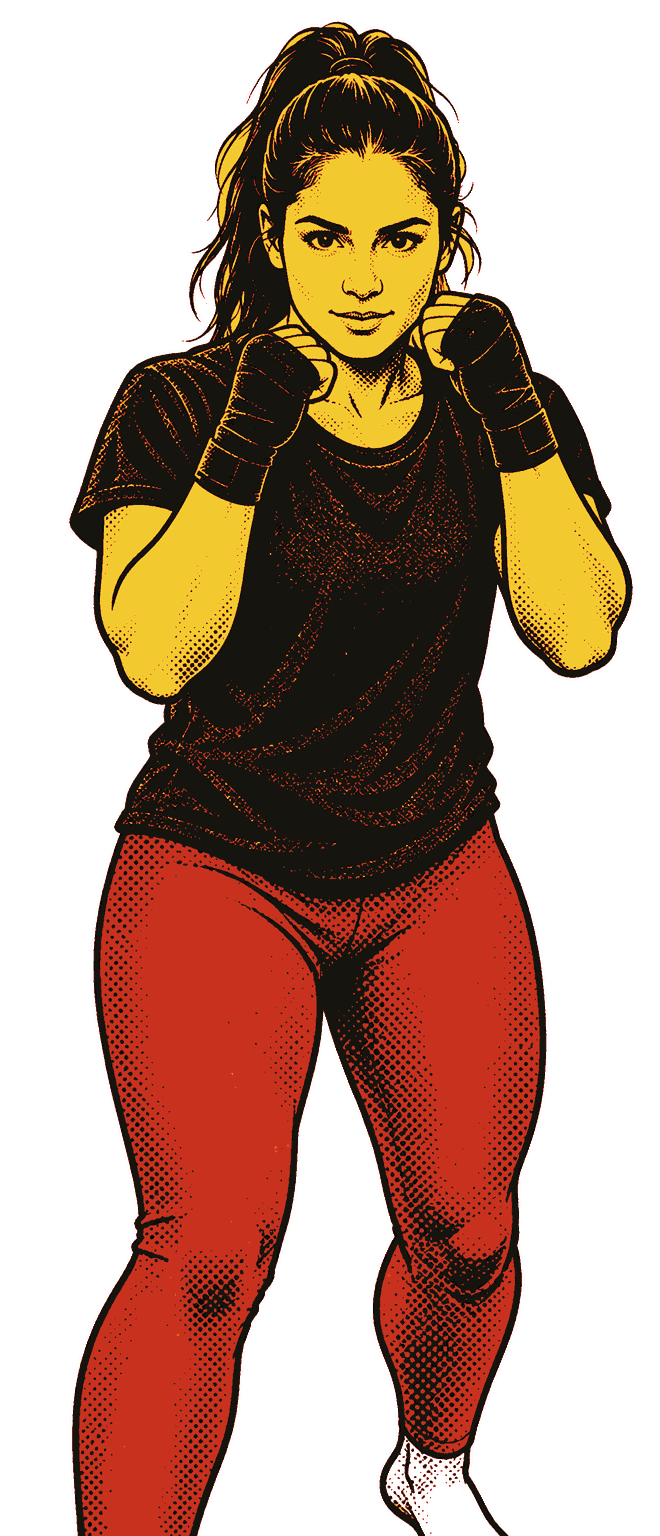
- The beginner's guard: both fists at your chin, elbows in at your ribs, chin down, eyes forward.
- A steady stance holds it up: feet about shoulder-width apart, lead foot forward, knees soft.
- Hands drop when your shoulders tire and when punches come back low. Short rounds and slow reps fix both.
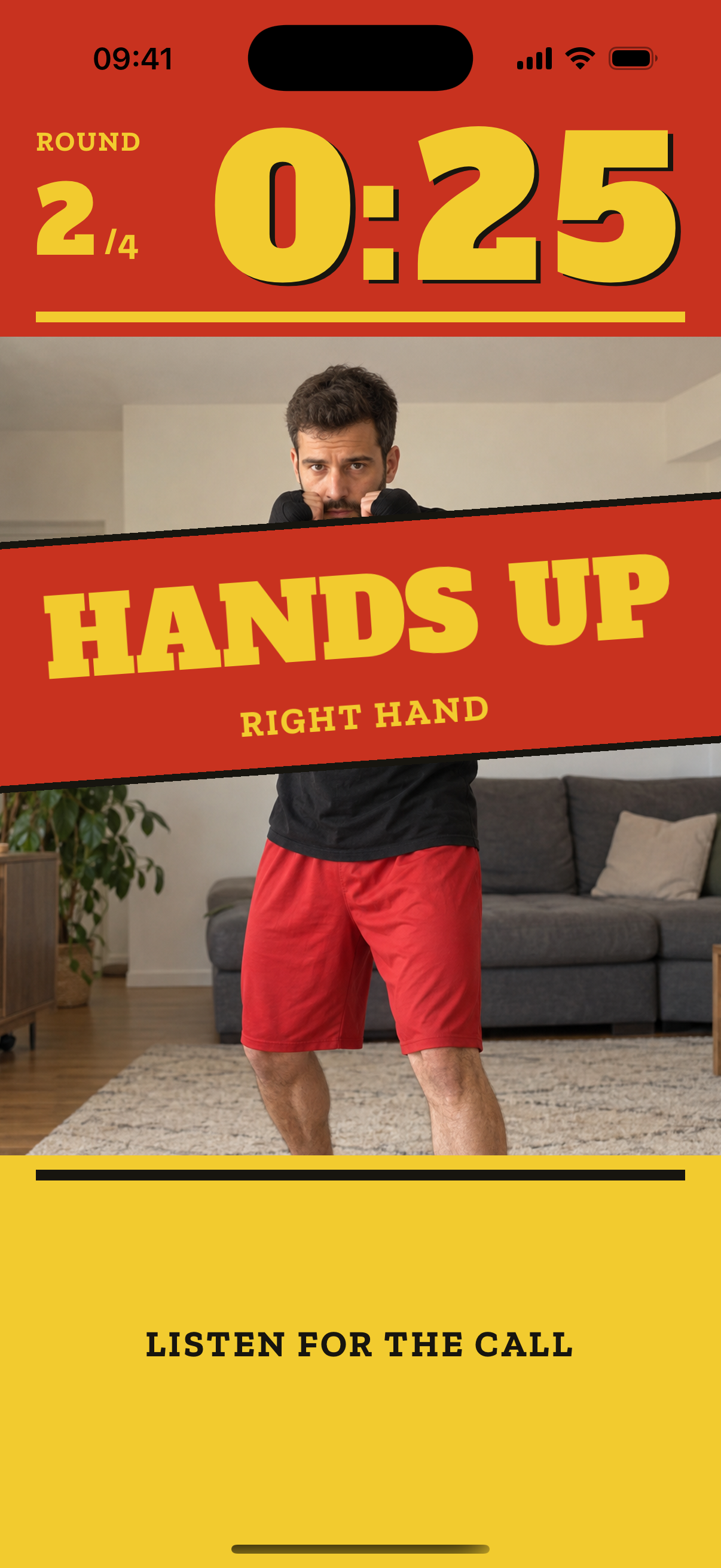
- Guardia's guard check calls "Hands up" and names the hand that dropped.
What is a guard in boxing?
Your guard is the place your hands and arms hold between punches. Your fists cover your chin and the sides of your face, and your elbows cover your ribs. Every punch starts from the guard and comes back to it.
Boxers use several guards. Beginners start with the high guard below, and the others build on it.
The basic high guard
- Stand in your stance (the next section shows how).
- Bring both fists up to your chin, knuckles up. The lead fist can sit a little in front of the rear one.
- Keep your elbows in, close to your ribs, pointing at the floor.
- Tuck your chin a little and look forward over your fists, not down at the floor.
- Let your shoulders sit low and keep your fists loose. Squeeze them tight only as a punch lands.
Your boxing stance
A guard is only as steady as the feet under it. If you wobble, you reach for balance with your hands, and they leave your chin.
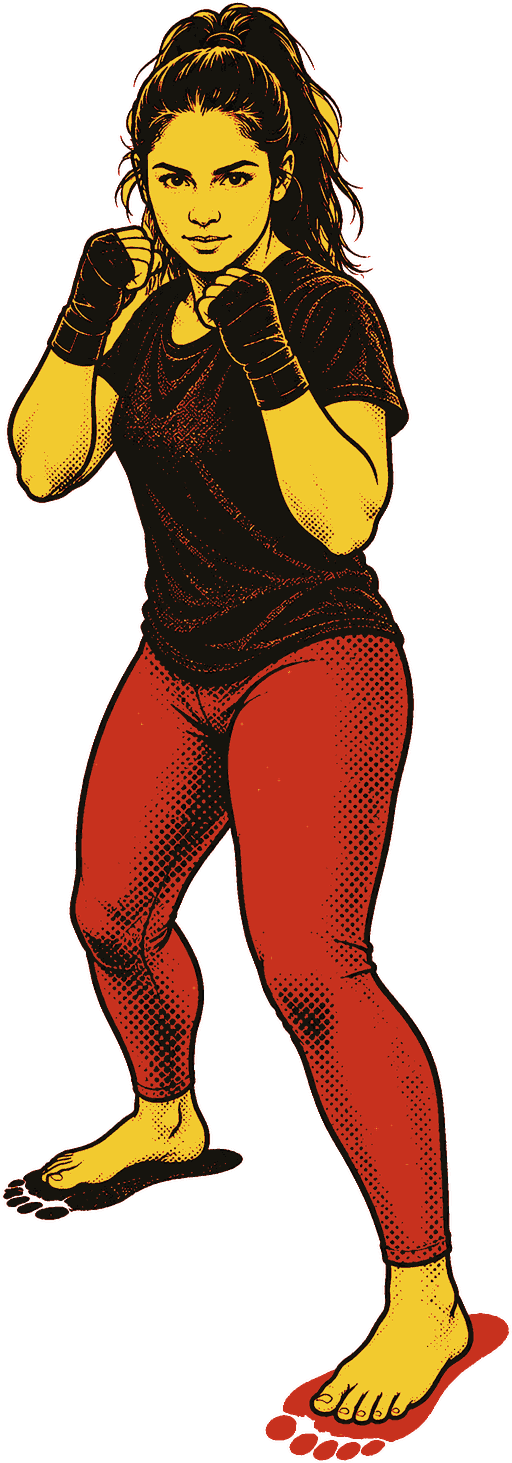
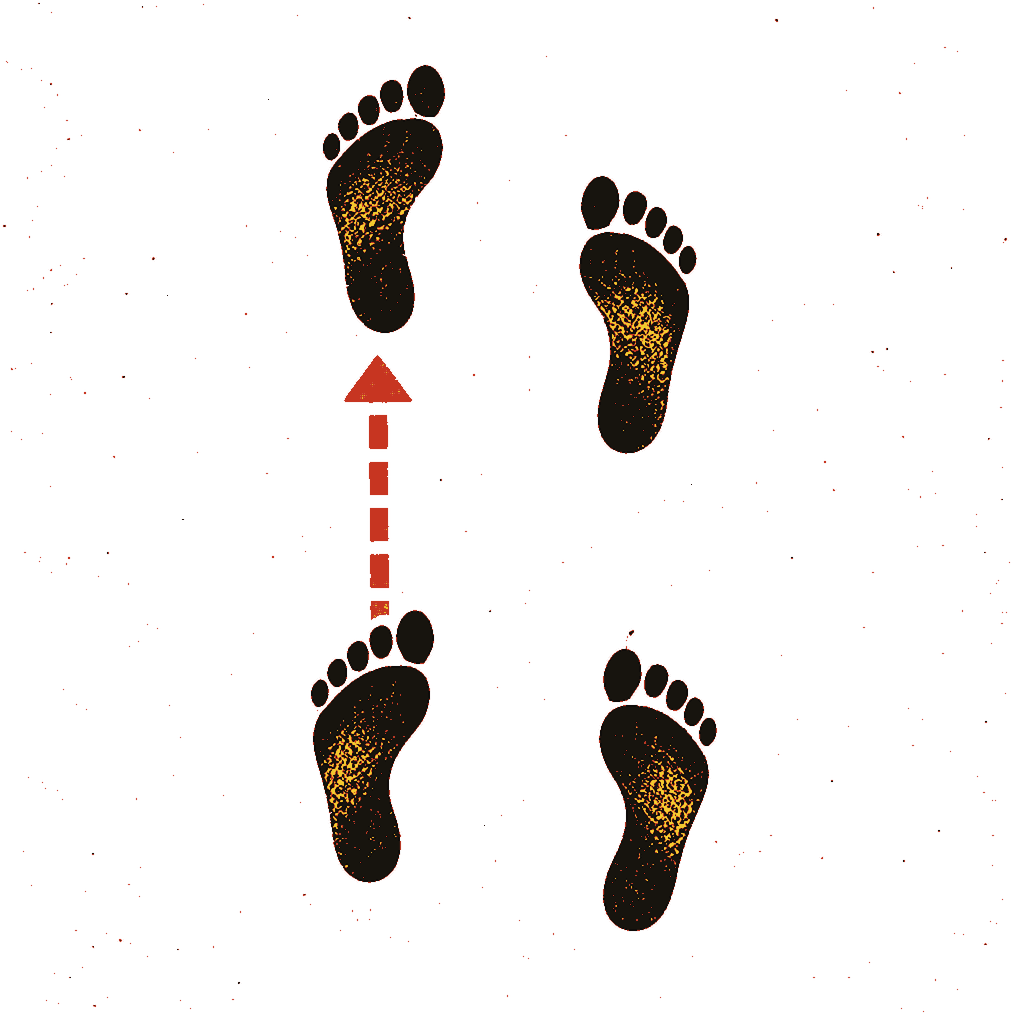
- Stand with your feet about shoulder-width apart.
- Step your lead foot forward. Keep the back foot a little to the side, so your feet sit on two rails, not on one tightrope.
- Keep your knees soft and your weight spread over both feet.
- With Guardia, keep your chest toward the phone.
| Stance | Front foot | Lead hand: 1, 3, 5 | Rear hand: 2, 4, 6 |
|---|---|---|---|
| Orthodox | Left | Left | Right |
| Southpaw | Right | Right | Left |
The numbers are the boxing numbers: odd for your lead hand, even for your rear hand.
Why your hands drop when you get tired
- Your shoulders tire. Holding your fists at your chin for minutes is work, and tired arms sink. Build up: short rounds, rest, then a little more.
- Your shoulders are tense. Shrugged shoulders and clenched fists tire you faster. Let the shoulders sit low and keep the fists loose between punches.
- Punches come back low. The fist returns to your chest, then climbs back up. Every punch has to finish at your chin.
- You hold your breath. Breathe out on each punch, and breathe between combos.
Short rounds are why Guardia's plan starts at 3 rounds of 1:30 with 45 seconds of rest, and builds to 4 rounds of 2:30 by week 4.
Common guard mistakes
| Mistake | What it looks like | Fix |
|---|---|---|
| Fists at the chest | Your hands sit low, below your chin. | Touch your chin with both fists. That is the height. |
| Elbows out | Your elbows point to the sides and your ribs are open. | Point your elbows at the floor, close to your body. |
| Chin up | Your head tips back and your chin sticks out over your fists. | Tuck the chin a little and look forward. |
| Hands too far out | Your fists float half an arm's length in front of your face. | Bring them back to your chin. |
Drills to keep your guard up
Set the boxing round timer to 3 rounds of 1:30 with 45 seconds of rest. Face a mirror or your phone, and do one drill per round:
- Guard and move. No punches. Step forward, back, and to each side in your stance, with both fists at your chin the whole round.
- Touch your chin. Throw slow single punches. Touch your chin with the fist before the next one goes out.
- The other hand stays home. Throw slow 1-2s. As each punch goes out, feel the other fist on your chin.
Then take the same rule into every punch: the jab, the cross, the hooks, and the uppercuts all finish at your chin.
How Guardia checks your guard
Stand 2 to 3 meters from the phone and face it, so the camera sees your body and both hands. During a round, Guardia watches both fists. If one stays at chest height or lower for a full second, the coach calls "Hands up" and the screen names the hand that dropped.
After each round you get one fix. If a hand dropped, that is the fix, and it names the hand: "Your right hand dropped 3 times. After every punch, bring both hands back to your chin." The summary also counts how many times your hands dropped.
Safety before you box
- New to exercise, or have a heart, joint, or other health condition? Check with a doctor first. The free PAR-Q+ questionnaire tells you whether you should.
- Warm up for 5 to 10 minutes: easy steps, arm circles, slow shadow boxing. A warm-up helps you move better and may lower injury risk.
- Clear 2 to 3 meters of floor in front of you. That is also the space the app's camera needs.
- Wrap your hands and wear gloves on a bag. In Great Britain's elite team, the hand was injured more than any other part of the body. Shadow boxing needs no gloves.
- Stop if you feel chest pain, dizziness, unusual shortness of breath, joint pain that does not settle, or numbness or swelling in a hand.
Guard and stance questions
What are the boxing stances?
There are two: orthodox, with the left foot forward, and southpaw, with the right foot forward. Most right-handed people box orthodox, and most left-handed people box southpaw.
Which boxing stance should I use?
Neither is better. Start with the one that feels steady: orthodox if you are right-handed, southpaw if you are left-handed. If you are not sure, Guardia starts you with the left foot forward, and you can change it in Settings.
What other guards are there in boxing?
Boxers also use the shoulder roll, where the lead hand sits low and the lead shoulder covers the chin, and the tight peek-a-boo guard. Learn them later, with a coach. Guardia checks for the high guard, so a low lead hand will get a "Hands up".
Do I need to keep my guard up when shadow boxing?
Yes. Shadow boxing is where the habit forms. If your hands come back low with no one in front of you, they will come back low when someone is.
Sources
- Fradkin, Gabbe, and Cameron, 2006. Does warming up prevent injury in sport? The evidence from randomised controlled trials?. Journal of Science and Medicine in Sport.
- Loosemore and others, 2015. Boxing injury epidemiology in the Great Britain team: a 5-year surveillance study of medically diagnosed injury incidence and outcome. British Journal of Sports Medicine.
- PAR-Q+ Collaboration. The Physical Activity Readiness Questionnaire for Everyone (PAR-Q+). eparmedx.com.
Guardia watches your guard through every round and tells you which hand dropped.

Guardia
Shadow training and home workouts
For iPhone. Coaching in English or Spanish.