
12 Boxing Combos for Beginners
A boxing combo is two or more punches thrown in a row. Coaches call them by number: 1 jab, 2 cross, 3 lead hook, 4 rear hook, 5 lead uppercut, 6 rear uppercut. So 1-2 is a jab then a cross. Start with 1-2, then add one punch at a time, in the order below.
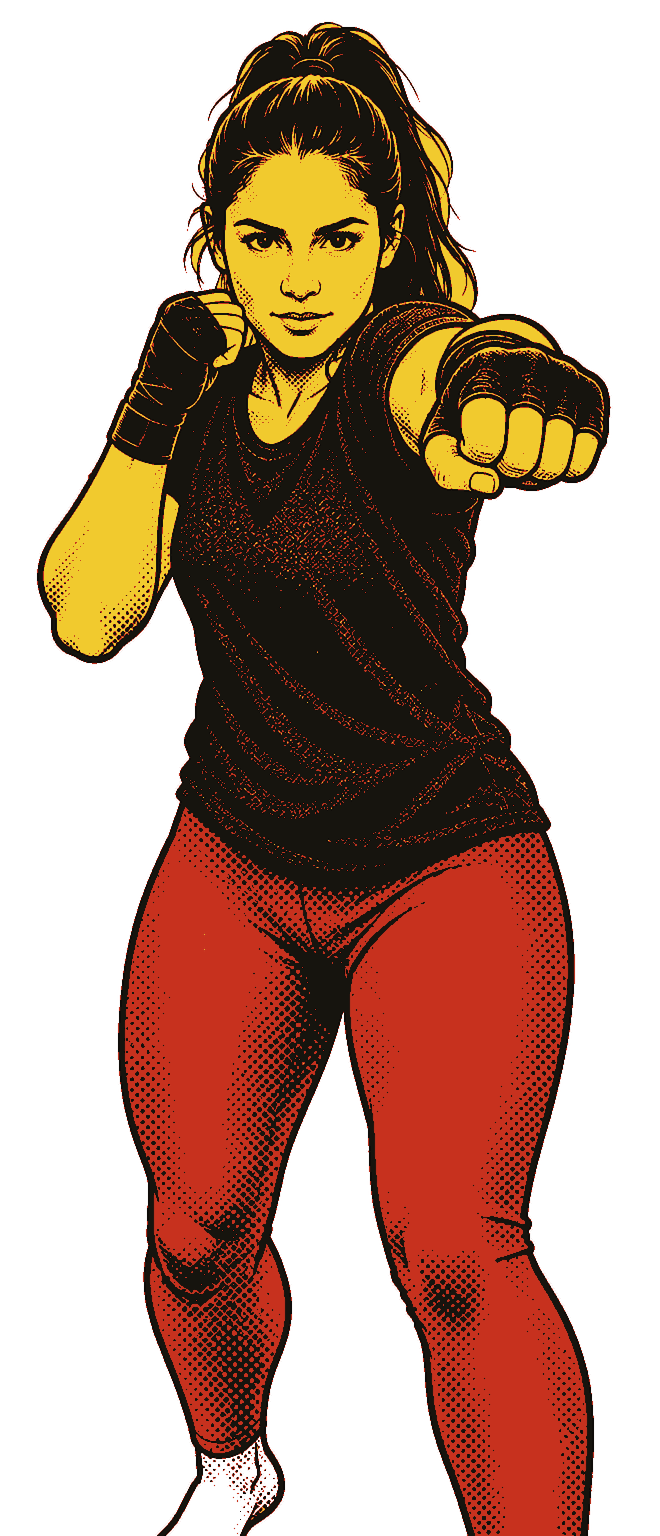
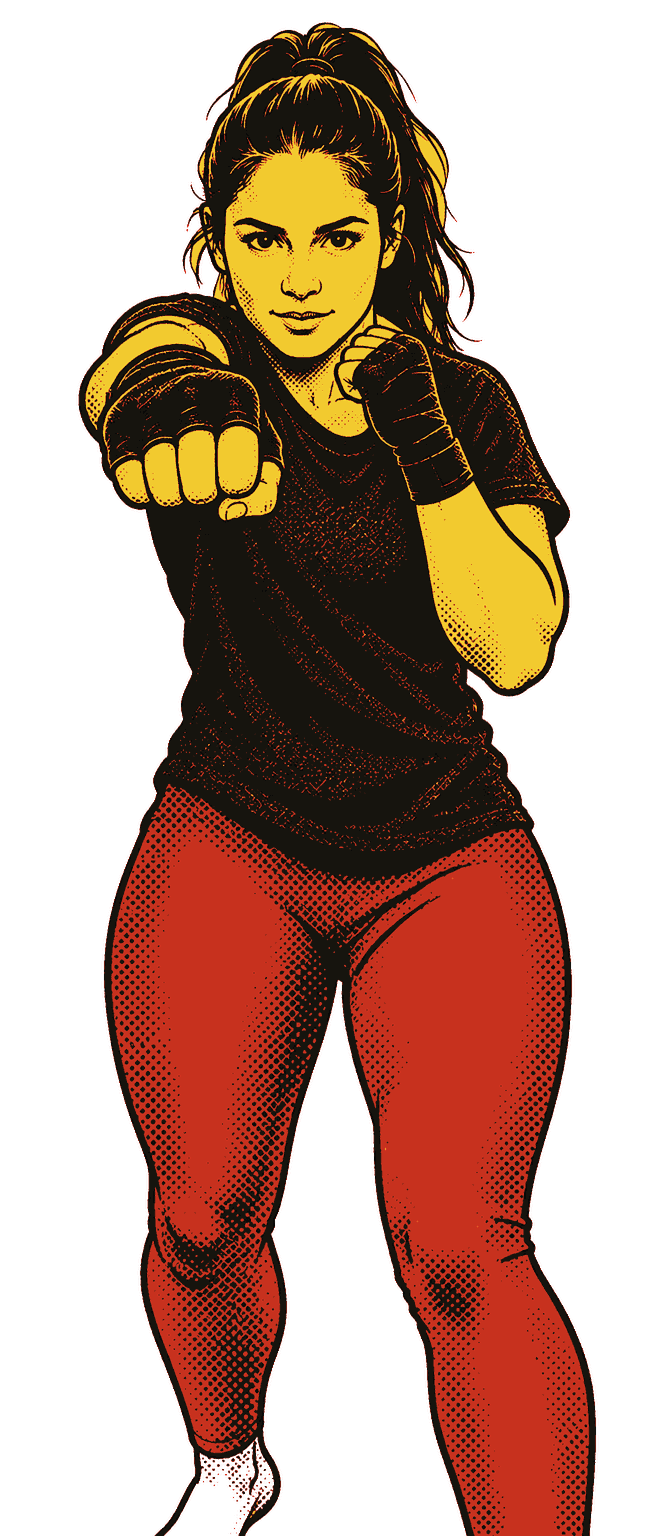
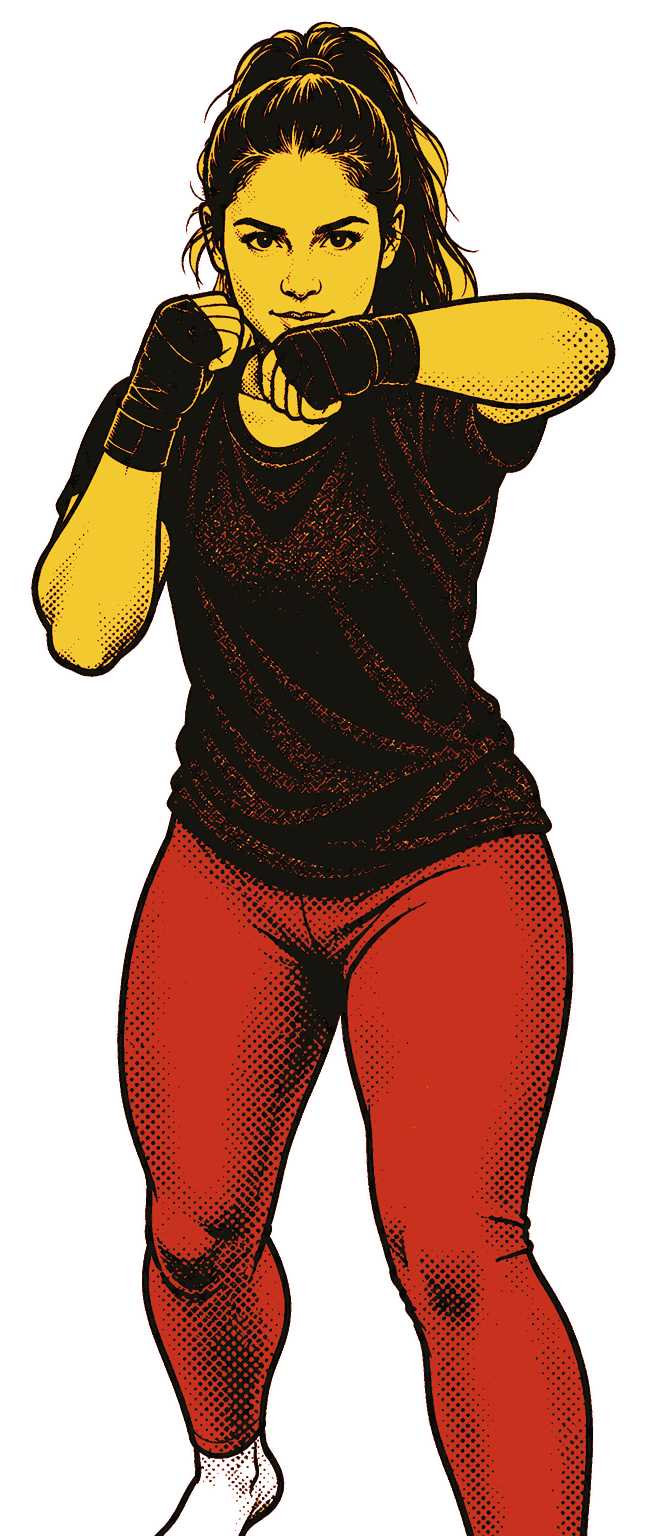
Key points
- Learn the straights first, then the hooks and uppercuts: the order coaching manuals use.
- The 12 combos here switch hands on every punch, except the double jab, 1-1-2.
- Bring each hand back to your chin before the next punch goes.
- Every combo below has an audio call, by number and then by name.
How to read a combo
Each number is one punch. Odd numbers are your lead hand and even numbers your rear hand. An orthodox boxer leads with the left, a southpaw with the right, so the same call works for both: only the hands swap.
| No. | Punch | Orthodox | Southpaw |
|---|---|---|---|
| 1 | Jab | Left | Right |
| 2 | Cross | Right | Left |
| 3 | Lead hook | Left | Right |
| 4 | Rear hook | Right | Left |
| 5 | Lead uppercut | Left | Right |
| 6 | Rear uppercut | Right | Left |
The boxing numbers chart explains the system and has the audio for each number.
The 12 combos
These are 12 combos from the first weeks of Guardia's beginner plan, from the easiest to the hardest: the straights first, then the hooks, then the uppercuts. Coaching manuals use a similar order. Boxing Canada's start a novice on the jab, the double jab, and the 1-2, then bring in the hooks and uppercuts, and call 1-2-3 the first basic three-punch combination with the lead hook.
Press play to hear each call by number, then by name.
-
1-2: Jab, cross
The base of boxing. The jab finds your distance, and the cross follows down the same line.
-
1-1-2: Jab, jab, cross
A double jab. The first jab finds your distance, the second comes in behind it, then the cross.
-
1-2-3: Jab, cross, lead hook
The classic three-punch combo. The cross turns your hips, and the lead hook turns them back.
-
3-2: Lead hook, cross
The hook first. Turning into the hook loads your rear side for the cross.
-
1-4: Jab, rear hook
The simplest way to learn the rear hook: the jab first, then the rear hand comes around.
-
2-3-2: Cross, lead hook, cross
Your hips turn back and forth: rear, lead, rear.
-
1-2-3-2: Jab, cross, lead hook, cross
Four punches, hands alternating, ending on your strong rear hand.
-
1-6: Jab, rear uppercut
A straight punch, then one from below with your rear hand.
-
5-2: Lead uppercut, cross
The lead uppercut, then the cross straight down the middle.
-
6-3: Rear uppercut, lead hook
Two short punches for close range: up with the rear hand, across with the lead.
-
1-2-5-2: Jab, cross, lead uppercut, cross
Two straights, a lead uppercut, and a cross to finish.
-
1-6-3-2: Jab, rear uppercut, lead hook, cross
All three shapes in one combo: straight, uppercut, hook, straight.
How to drill a combo at home
Shadow boxing is enough to learn combos: no bag, no partner. Set the round timer to 3 rounds of 2 minutes with 45 seconds of rest, and run each round like this:
- Build it up one punch at a time, each step twice. For 1-2-3-2: 1, then 1-2, then 1-2-3, then the whole combo.
- Throw it 3 times in a row, back to your guard each time.
- Pick 2 or 3 combos a round and mix them in the last third.
- Say the numbers out loud as you throw, until you can hear a call and throw it without thinking.
Go slow first. Boxing Canada's manual tells coaches to keep novices on simple combos, practiced slowly, until they are mastered. A combo is learned when it comes out clean at the same speed every time, not when it is fast. The 4-week plan spreads these combos over four weeks, with a free PDF.
Why these combos switch hands
Every combo here except 1-1-2 switches hands on every punch. Each punch turns your hips one way and sets up the next punch from the other side. A combo that asks one hand twice, like 2-4, makes that hand come back and go out again while the other one waits. Switching hands is the easier habit to build first. Combos that use one hand twice, like 3-4-2 in week 4 of the plan, come once the basics are solid.
The double jab is the exception on purpose. Two jabs in a row are a basic of boxing: the first one finds your distance, the second one closes it.
Common combo mistakes
| Mistake | What it looks like | Fix |
|---|---|---|
| Dropping the other hand | The hand that is not punching falls to your chest | Keep it touching your chin. Check in a mirror. |
| Rushing | Punches turn into pushes, or the last one is weak | Slow down until every punch is full and clean |
| Stopping between punches | A pause after each punch, as if they were separate | Start the next punch as the last one comes back |
| Wide hooks | The arm swings out wide, elbow low | Keep the elbow up and the arc short |
| Too long too soon | Five-punch combos that fall apart | Master 2 and 3 punches first |
The beginner mistakes guide covers stance, guard, and balance mistakes too.
After the 12 combos
Once these feel easy, add two things the way Guardia's plan does in week 4. First, body shots: a b after a number means to the body, so 1-2b is a jab to the head and a cross to the body. Bend your knees to drop your level, and never punch down. Then, moves of the head: slip-2 moves your head off the line of a straight punch and answers with a cross.
Combos with Guardia
Calling your own combos means your brain picks the next one before your body throws it. A coach calling them makes you react instead, which is closer to boxing. Guardia calls every combo above out loud, by number or by name, in English or Spanish. Prop your iPhone up 2 to 3 meters away and face it: the camera counts and names each punch, and marks a combo clean when you throw the right punches in the right order. The phone does the counting, and video never leaves your phone.
Before you drill combos
- New to exercise, or have a heart, joint, or other health condition? Check with a doctor first. The free PAR-Q+ questionnaire tells you whether you should.
- Warm up for 5 to 10 minutes: easy steps, arm circles, slow shadow boxing. A warm-up helps you move better and may lower injury risk.
- Clear 2 to 3 meters of floor in front of you. That is also the space the app's camera needs.
- Wrap your hands and wear gloves on a bag. In Great Britain's elite team, the hand was injured more than any other part of the body. Shadow boxing needs no gloves.
- Stop if you feel chest pain, dizziness, unusual shortness of breath, joint pain that does not settle, or numbness or swelling in a hand.
Questions about boxing combos
What is a 1-2 in boxing?
A jab followed by a cross: punch 1 with your lead hand, then punch 2 with your rear hand. It is usually the first combo a beginner learns.
What is a 1-2-3 in boxing?
A jab, a cross, and a lead hook. For an orthodox boxer that is left, right, left hook. For a southpaw it is right, left, right hook.
How do I remember boxing combos?
Learn the six numbers first, then say each number out loud as you throw it. Drill only 2 or 3 combos a round, and add a new one when those come out without thinking.
Can I practice combos without a bag?
Yes. Shadow boxing is how most beginners learn combos: you throw them at the air, at a speed you can control, and focus on form instead of impact.
Are boxing combos different for southpaws?
The numbers stay the same, only the hands swap. A southpaw throws 1-2 as right, left, and 1-2-3 as right, left, right hook.
Sources
- Boxing Canada, 2016. Apprentice Coach Reference Material, version 1.4. Boxing Canada.
- Boxing Canada, 2016. Club Coach Reference Material, version 1.7. Boxing Canada.
- Fradkin, Zazryn, and Smoliga, 2010. Effects of warming-up on physical performance: a systematic review with meta-analysis. Journal of Strength and Conditioning Research.
- Fradkin, Gabbe, and Cameron, 2006. Does warming up prevent injury in sport? The evidence from randomised controlled trials?. Journal of Science and Medicine in Sport.
- PAR-Q+ Collaboration. The Physical Activity Readiness Questionnaire for Everyone (PAR-Q+). eparmedx.com.
Guardia calls these combos out loud, by name or by number, and counts every punch you throw.

Guardia
Shadow training and home workouts
For iPhone. Coaching in English or Spanish.