
12 Beginner Boxing Mistakes and How to Fix Them
The most common beginner boxing mistake is a dropped guard: the hand that is not punching falls from your chin, or a punch comes back low. All five coaching sources we checked list it. Next come punching with only your arm, looking away from the target, lifting your chin, and a stance that is too narrow or too wide.
Key points
- Almost every mistake gets worse when you are tired, so keep rounds short while you learn.
- The dropped guard is the one to fix first. It is the only mistake all five sources call an error.
- Fix one mistake at a time. Pick the one you see most, and drill only that for a week.
- A mirror, a video of yourself, or Guardia’s guard check catches what you cannot feel.
The 12 most common mistakes
We read the lists of common errors in five coaching sources: England Boxing's coaching handbook, USA Boxing's training manual, Boxing Canada's coach manuals, Expert Boxing, and Evolve. Then we counted how many of them name each mistake. Mistakes that only matter in sparring, like drinking too much water between rounds, are left out. This list is for a beginner at home. Standing square, which four sources list, is in the feet section below, because the app asks you to face the phone.
| Mistake | What it looks like | Fix | Sources |
|---|---|---|---|
| Dropped guard | The hand that is not punching leaves your chin, or a punch comes back low | Bring every punch straight back to your chin. The other hand stays home. | 5 of 5 |
| Arm punching | Only the arm moves. Hips and feet stay still | Turn your hip and pivot your back foot on the cross and the hooks | 5 of 5 |
| Eyes off the target | You look at the floor, or away as you punch | Look at the target through your eyebrows the whole round | 5 of 5 |
| Chin up | Your head tips back, most of all on the jab | Chin down, so you look out from under your brow | 4 of 5 |
| Feet too close or too wide | Feet side by side, or a stance so wide you cannot step | About shoulder width, lead foot forward, rear foot behind and to the side | 4 of 5 |
| Leaning or reaching | Your head moves past your front knee to reach the target | Step closer instead. Keep your head over your stance | 4 of 5 |
| Flat feet | Both heels on the floor, steps land on the heel | Rear heel slightly up. Move on the balls of your feet | 3 of 5 |
| Tension | Shoulders up by your ears, fists squeezed all round | Shoulders low, fists closed but loose until the punch lands | 3 of 5 |
| Telegraphing | You pull the hand back or wind up before you punch | Throw from where your hand is | 3 of 5 |
| Too hard, too fast | Form falls apart halfway through a round | Slow down. Use shorter rounds until the form holds | 3 of 5 |
| Crossing the feet | One foot steps over or next to the other as you move | The foot nearest the direction moves first. Keep the same gap | 3 of 5 |
| Holding your breath | No breath out for several punches in a row | Breathe out short and sharp on each punch | 3 of 5 |
One pattern runs through all of them: they get worse when you are tired. Boxing Canada's coach manual says that after a few minutes, or under stress, many boxers fall back to their natural position, and that beginners do it most. So the first fix for almost every mistake is the same: shorter rounds, until the right form holds to the bell.
1. The dropped guard
It is the only mistake all five sources list as an error. The rear hand drifts down while the jab goes out, a punch comes back to your chest instead of your chin, or both hands sink as the round goes on. In sparring, that opens your chin. At home, it builds the habit you will take to a gym.
- Bring every punch back along the same line it went out, all the way to your chin.
- Keep the hand that is not punching touching your chin or cheek.
- Relax your shoulders. Shrugged shoulders tire fast, and then the hands drop.
The guard guide has three drills for it, for both stances.
How Guardia catches it
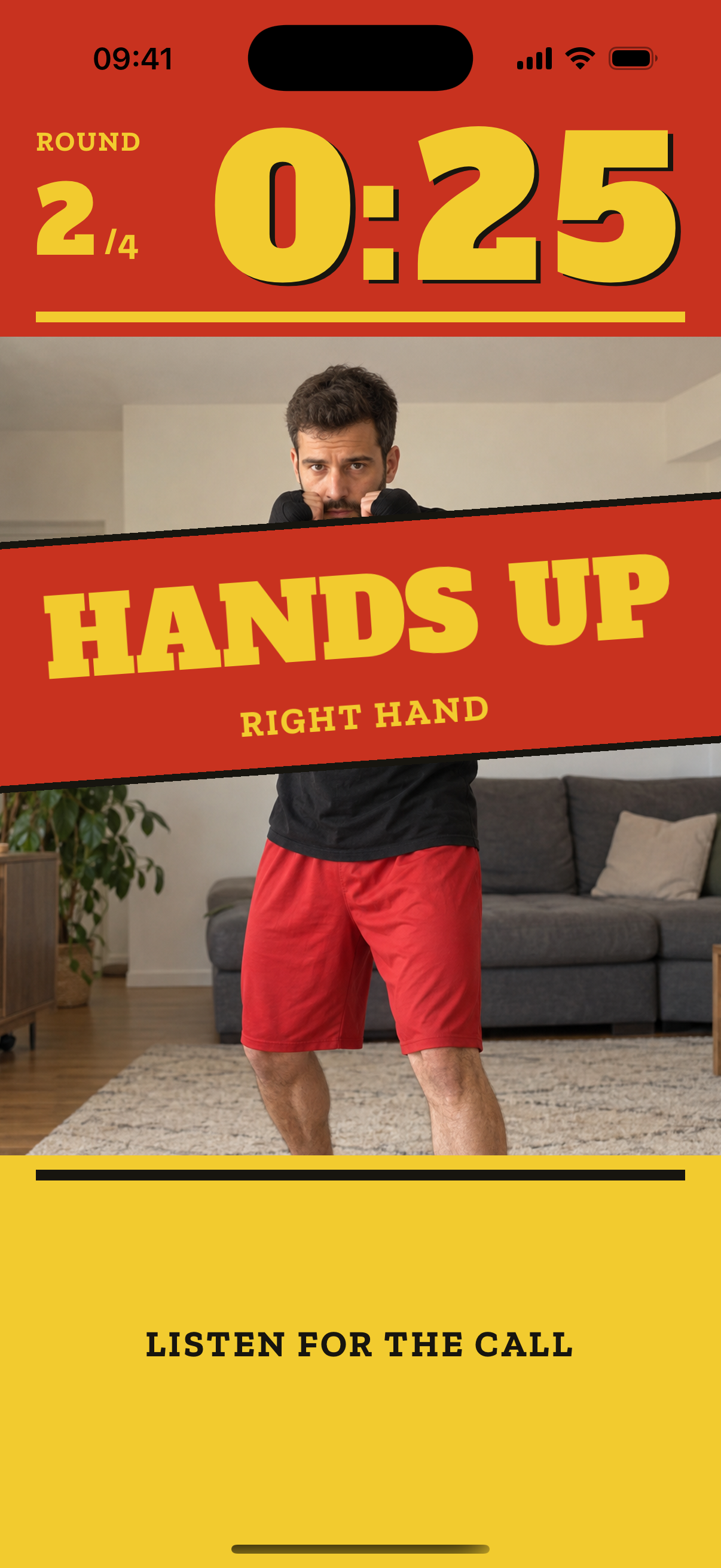
This is the mistake the app watches for. During a round, the camera follows both fists. If one stays at chest height or lower for a full second, the coach says "Hands up" and the screen names the hand. After the round, you get a fix like: "Your right hand dropped 3 times. After every punch, bring both hands back to your chin." A hand that dips for less than a second is not flagged.
2. Arm punching
The power of a punch comes from the floor up: your foot pivots, your hip turns, and the arm comes last. An arm punch skips the first two. On the cross, turn your rear hip toward the target and pivot on the ball of your back foot. On the hooks, turn the hip and foot on the punching side. The cross guide shows the pivot step by step.
3. Eyes, chin, and head
Three mistakes sit together here, and one fix helps all of them: keep your head still and your eyes up.
- Looking away. Pick a spot at chin height on an imaginary opponent and keep your eyes on it, even as you punch.
- Chin up. Tuck your chin a little and look out through your eyebrows. The jab is where it lifts most.
- Leaning or reaching. If the target is too far, step closer. Your head stays over your stance, not past your front knee.
4. Feet: stance, heels, and steps
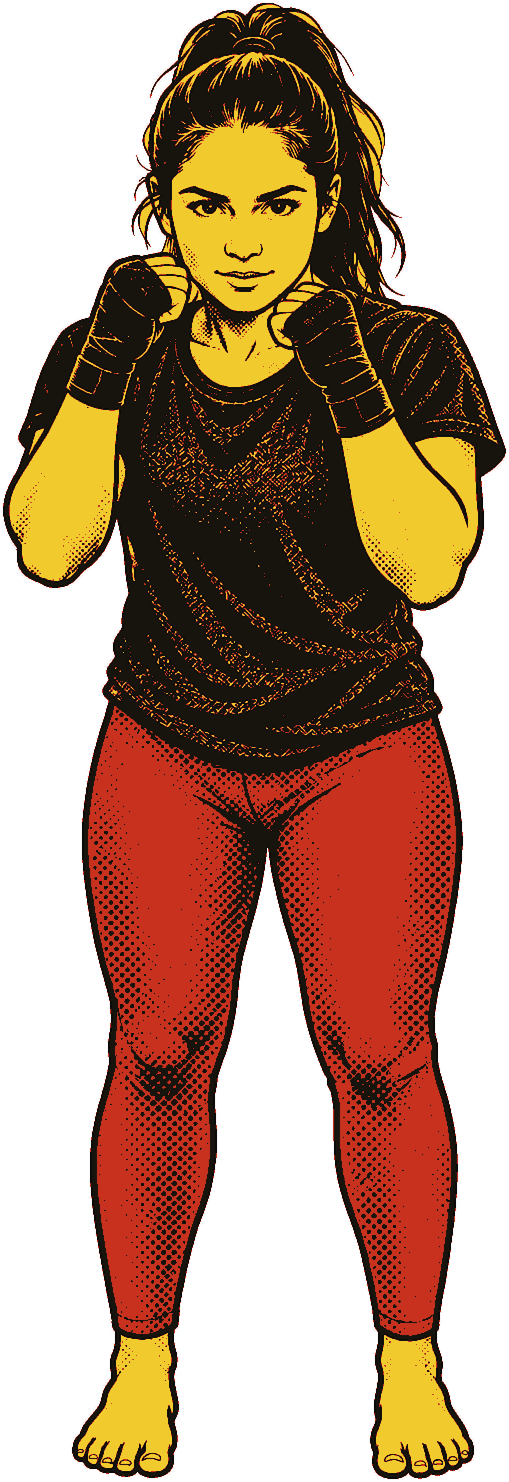
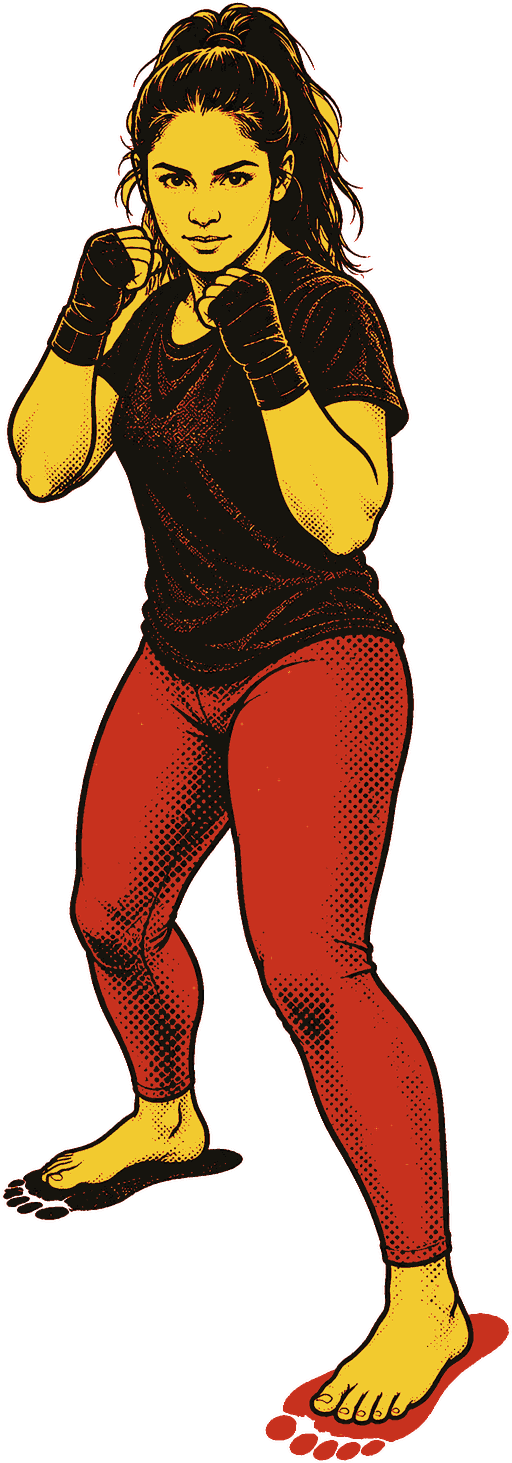
- Feet too close or too wide. Stand about shoulder-width apart, lead foot forward, rear foot behind and to the side. Feet side by side give you no balance forward or back. Feet too wide stop you from stepping.
- Flat feet. Lift your rear heel slightly and move on the balls of your feet.
- Crossing your feet. To move, the foot nearest the direction steps first and the other one follows. The gap stays the same.
Coaches teach a stance turned about 45 degrees from the opponent. With Guardia, turn your chest a little more toward the phone, so the camera can see both hands. Keep the feet staggered either way.
5. Hooks that swing wide
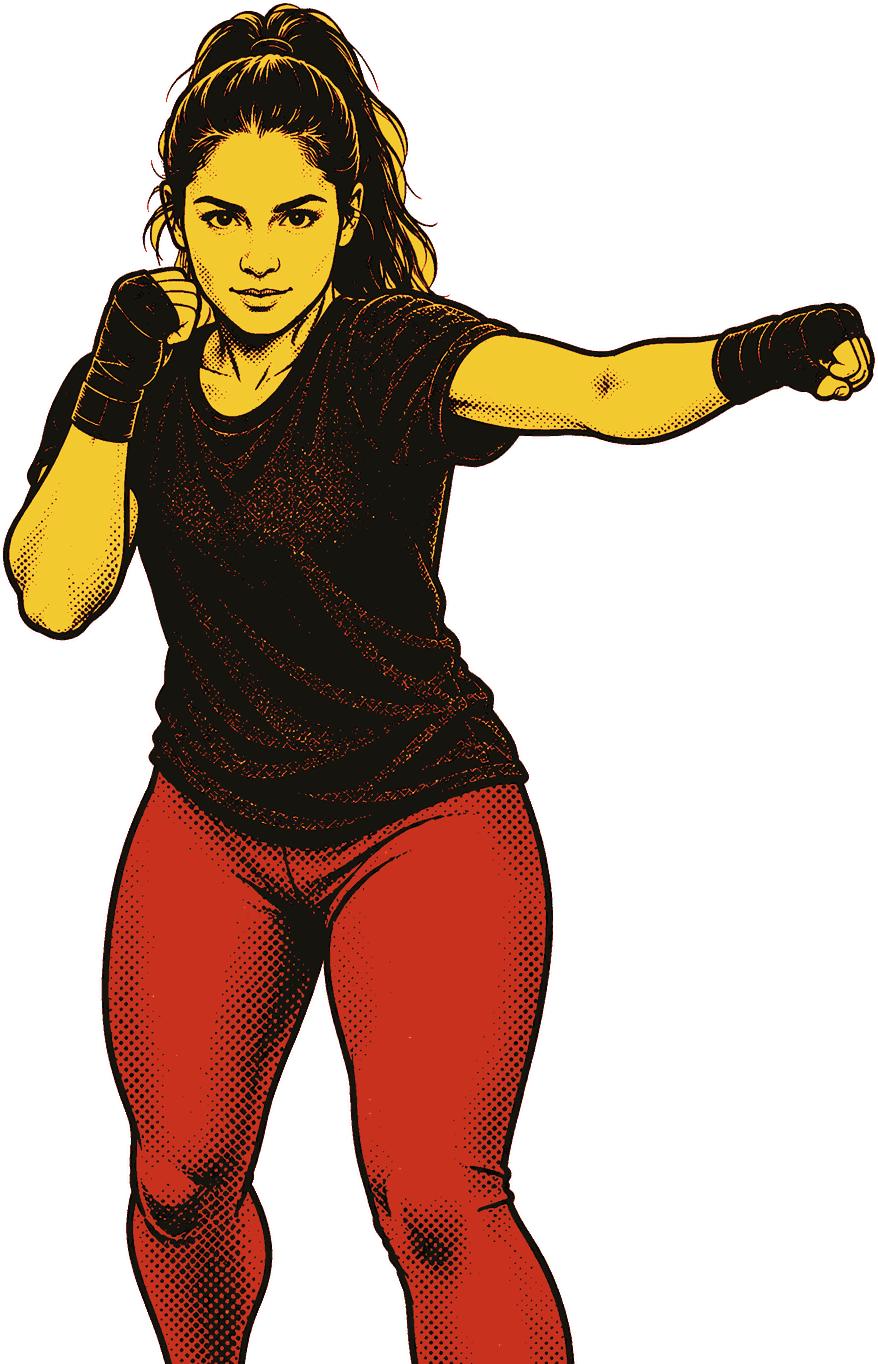
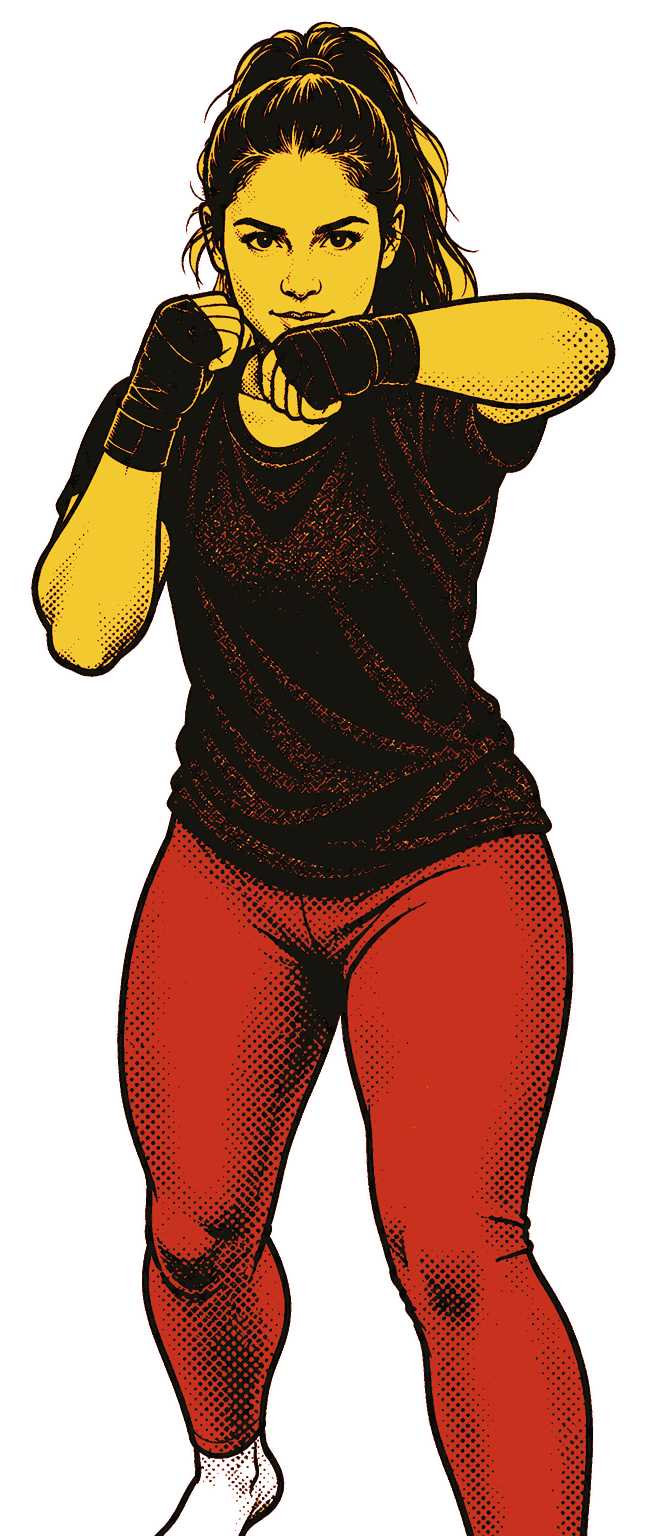
A hook is a short, bent-arm punch. England Boxing's handbook lists the arm straightening before the arc is done as an error. Keep the elbow up level with your fist, the arm bent at about a right angle, and turn your body to move the fist. The hook guide covers both hands.
6. Tension, telegraphing, and breathing
- Tension. Hold your fists closed but loose, and squeeze only as the punch lands. Clenched fists tighten your shoulders.
- Telegraphing. Do not pull your hand back or drop it before a punch. The first movement is the punch.
- Holding your breath. Breathe out short and sharp on each punch. In a long combo, one breath out per punch.
7. Too hard, too fast
Speed and power come last. A beginner who throws every punch at full speed practices sloppy form many times over. Slow down until each punch comes out clean and comes back to your chin, then add speed bit by bit. In Guardia, if your guard held but you missed the same punch twice or more in a round, the fix after the round tells you to slow down and land it clean before you add speed.
What about locking your elbow?
The sources disagree here, so it is not on the list. England Boxing teaches the jab with a fully extended arm, and lists not reaching full extension as an error. The risk is the snap: in a study of professional boxers with elbow injuries, the injury often started with a missed punch that forced the joint past straight. In shadow boxing, every punch misses. So our guides say to stop each punch just short of a locked elbow, and never to let it snap straight at full speed.
How to check yourself at home
| Check | Best for | When you find out |
|---|---|---|
| A mirror, from the front | Guard, chin, elbows, tension | Live, if you keep your eyes on it |
| A mirror, side-on | Leaning, stance, flat feet | Live, if you keep your eyes on it |
| A video of yourself | Telegraphing, arm punching, feet in motion | After the round |
| Guardia | The dropped guard and missed punches | Live, called out loud, and one fix after the round |
The coaching manuals use the mirror too: Boxing Canada tells boxers to check their stance in it regularly. Film one round from the front and one from the side with your phone's camera, and play it back slowly next to the guide for each punch, starting with the jab.
How to fix one mistake at a time
- Pick one. The one you see most, usually the dropped guard.
- Go slow. Throw single punches at half speed and get it right ten times in a row.
- Add a combo. A short one, like 1-2, still slow.
- Add speed, a little each round, and stop adding when the mistake comes back.
- Keep it a week, then pick the next one.
The 4-week plan is built the same way: one new family of punches a week, with short rounds so your form holds.
Safety while you practice
- New to exercise, or have a heart, joint, or other health condition? Check with a doctor first. The free PAR-Q+ questionnaire tells you whether you should.
- Warm up for 5 to 10 minutes: easy steps, arm circles, slow shadow boxing. A warm-up helps you move better and may lower injury risk.
- Clear 2 to 3 meters of floor in front of you. That is also the space the app's camera needs.
- Wrap your hands and wear gloves on a bag. In Great Britain's elite team, the hand was injured more than any other part of the body. Shadow boxing needs no gloves.
- Stop if you feel chest pain, dizziness, unusual shortness of breath, joint pain that does not settle, or numbness or swelling in a hand.
Questions about boxing mistakes
What is telegraphing in boxing?
Showing a punch before you throw it: pulling the hand back, dropping it, or dipping the shoulder first. Throw from where your hand already is, so the first movement is the punch itself.
Why do my hands drop when I get tired?
Your shoulders tire first, and tired muscles take the easy position. Boxing Canada’s coach manual notes that boxers fall back to their natural position after a few minutes, most of all beginners. Short rounds and the habit of bringing each punch back to your chin are the fix.
Can I fix my form without a coach?
Many mistakes, yes. A mirror shows your guard, chin, and feet. A video of yourself shows what you cannot feel, and slow motion shows each punch. A coach still sees things neither can, like how your weight moves.
How long does it take to break a bad habit?
There is no fixed number. Work on one mistake at a time, at a slow speed first, until you do it right without thinking. Then add speed. If the mistake comes back when you are tired, the rounds are still too long.
Sources
- England Boxing, 2022. Boxing Coaching Handbook, Part 1. England Boxing.
- USA Boxing, 2014. Grassroots Task Force Best Practices Training Manual. USA Boxing.
- Boxing Canada, 2016. Apprentice Coach Reference Material, version 1.4. Boxing Canada.
- Boxing Canada, 2016. Club Coach Reference Material, version 1.7. Boxing Canada.
- Johnny N., 2018. Top 5 Beginner Boxing Mistakes. Expert Boxing.
- Evolve University. Ten Common Mistakes Boxing Newbies Make. Evolve University.
- Evolve MMA. How to prevent telegraphing your punches in boxing. Evolve MMA.
- Valkering and others, 2008. Posterolateral elbow impingement in professional boxers. American Journal of Sports Medicine.
- Fradkin, Gabbe, and Cameron, 2006. Does warming up prevent injury in sport? The evidence from randomised controlled trials?. Journal of Science and Medicine in Sport.
- PAR-Q+ Collaboration. The Physical Activity Readiness Questionnaire for Everyone (PAR-Q+). eparmedx.com.
Guardia watches your guard all round, says “hands up” when one drops, and gives you one fix after each round.

Guardia
Shadow training and home workouts
For iPhone. Coaching in English or Spanish.